


I kept seeing these cool plants suspended from trees around the neighborhood, and learned they were called staghorn ferns. Staghorn ferns derive their name from their distinctive fronds, which resemble the antlers of a stag.
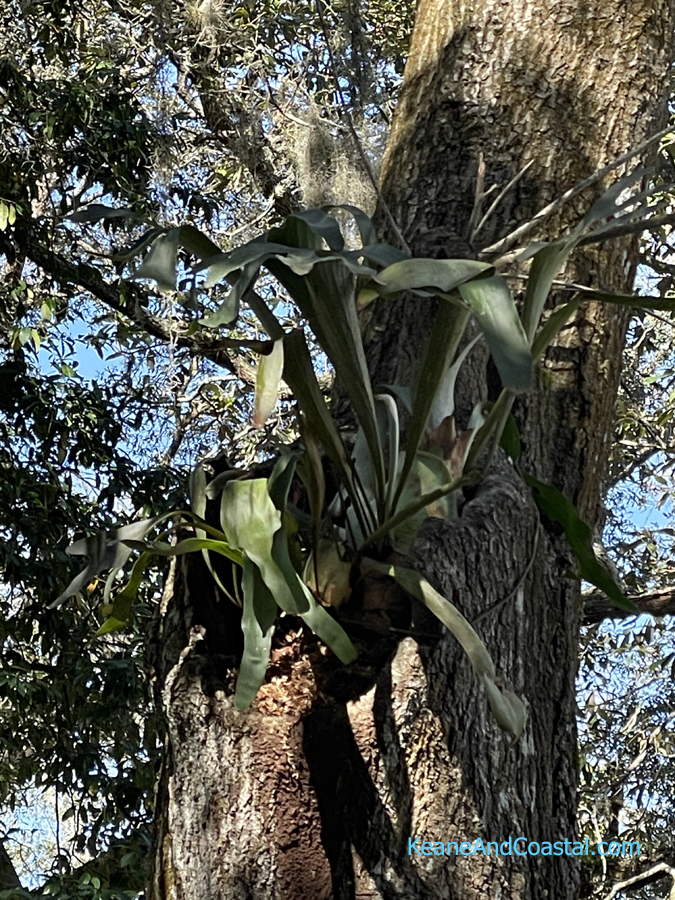
I’d been wanting one for a while, and a neighbor dropped one off, with the growing medium still attached to the bottom. This made it easy to place in the hollowed-out part of a tree that had lost a big limb.

It’s been a few months since we placed it, and it’s doing quite well! Hopefully by now it has attached itself to the tree so it can continue to grow and get bigger.
It has required zero maintenance so far, which is good, because it’s pretty far up the tree!
All About Staghorn Ferns
Staghorn ferns, scientifically known as Platycerium, are epiphytic plants that typically grow on trees or rocks in their natural habitat. The ferns are native to tropical regions and are prized for their ornamental value.
Light and Temperature
When it comes to caring for staghorn ferns, providing the right light and temperature conditions is crucial. These plants thrive in bright, indirect light, making them ideal for areas with filtered sunlight.
Staghorn ferns prefer temperatures ranging from 60°F to 80°F (15°C to 27°C). Protect them from direct sun exposure, as it can scorch their fronds.
Ours is located in a tree that gets filtered sunlight during the day and protects the fern from our scorching Florida 100+ degree sunlight.
Watering and Humidity
Maintaining appropriate moisture levels is essential for staghorn ferns. While they don’t require frequent watering, it’s crucial to ensure that their root ball remains consistently moist. (This makes me think I should probably go try and water ours, as it’s been terribly dry lately!)
One effective method is to mist the plant regularly, especially during dry periods. Additionally, staghorn ferns benefit from higher humidity levels, so consider placing a humidity tray nearby or using a room humidifier if you live in a dry climate. No worries about that here in Florida!
Planting Staghorn Ferns
When planting staghorn ferns, you need to mimic their natural growing conditions. As epiphytes, staghorn ferns can be mounted on wooden boards or placed in hanging baskets filled with a well-draining potting mix. Sphagnum moss or orchid bark can be used to securely anchor the plant while allowing air circulation around the roots.
Fertilization
Staghorn ferns have modest fertilization needs. During the growing season (spring and summer), apply a balanced, water-soluble fertilizer to support healthy growth. Dilute the fertilizer to half the recommended strength to avoid over-fertilizing, which can harm the plant.
Maintenance and Pruning
Regular maintenance helps staghorn ferns thrive. Remove any debris or dust from their fronds by gently wiping them with a damp cloth. Pruning dead or brown fronds can promote new growth and maintain the plant’s vigor.
Potential Pests
While generally resilient, staghorn ferns can be susceptible to mealybugs and scale insects. Promptly address any pest infestations by gently wiping the affected areas with a cloth soaked in diluted neem oil or insecticidal soap.
In conclusion, staghorn ferns are captivating plants that offer unique aesthetic appeal and require minimal upkeep. By understanding their specific care requirements and opting for suitable planting methods, plant enthusiasts can enjoy the elegance of staghorn ferns in various settings, adding a touch of natural beauty to their surroundings.
Discover more from Keane & Coastal
Subscribe to get the latest posts sent to your email.
 Keane & Coastal
Just posted on my site about moving a staghorn from our friend’s tree to our tree.
LikeLiked by 1 person
Ours seems to like its new location. I’ll have to check out your post :)
LikeLiked by 1 person