

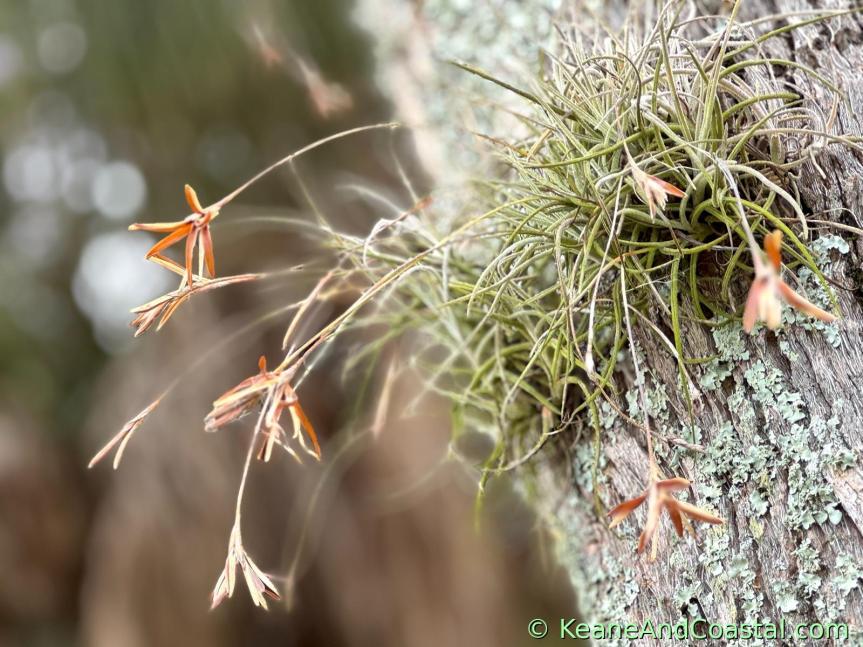
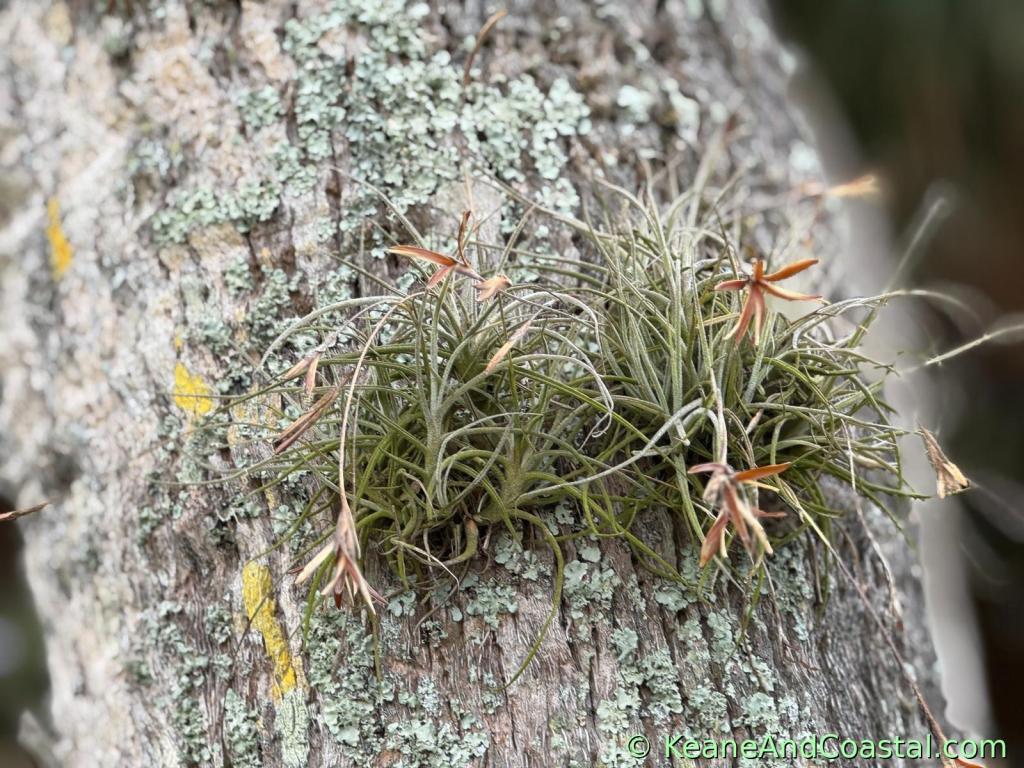
If you’ve noticed a mossy looking plant growing on your trees, but it looks spikier and has little flowers sticking out of it, you’ve found a Ball Moss Air Plant. And the interesting thing is- it’s not really moss!
It belongs to the bromeliad family and is more closely related to plants like pineapples than to true moss species. And don’t worry, it’s not harming your trees at all.
What Are Air Plants?
Air plants are remarkable because they grow without soil. Instead of roots digging into the ground, they anchor themselves to surfaces such as tree bark, fences, rocks, and even power lines. Their roots are used mostly for gripping, not feeding.
These plants absorb water and nutrients through their leaves using specialized structures called trichomes. These tiny scales allow them to capture moisture, dust, and nutrients from the air. In humid regions like coastal Florida, this system works beautifully because the air often carries enough moisture to sustain them.
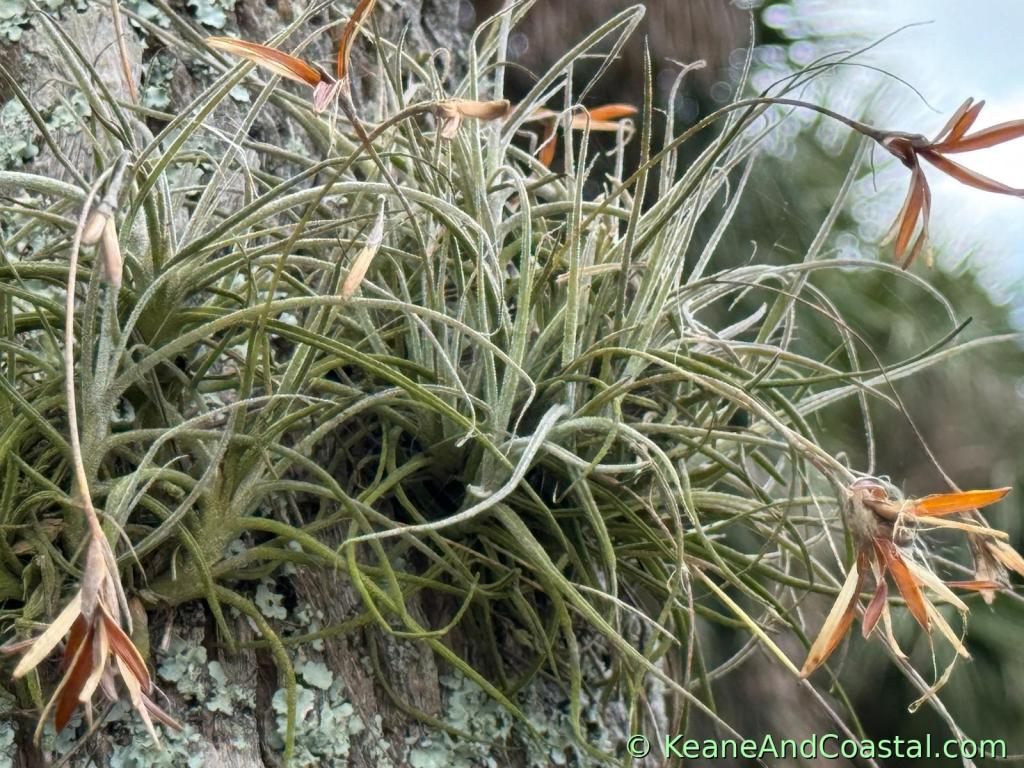
Air Plants on Trees
Palm trees and live oaks make ideal hosts for air plants. Their bark gives the plants a place to attach, and the open canopy allows filtered sunlight and airflow. The key thing to understand is that air plants are epiphytes, not parasites.
That means they simply use the tree for support. They do not draw nutrients from the tree itself and generally do not harm healthy trees.
In some cases, if a tree is already weak or stressed, a very heavy growth of air plants can slightly reduce sunlight reaching the branches. But in most landscapes, they are simply part of the natural ecosystem.
Their presence can even be a small indicator of relatively clean air, since some species are sensitive to pollution.
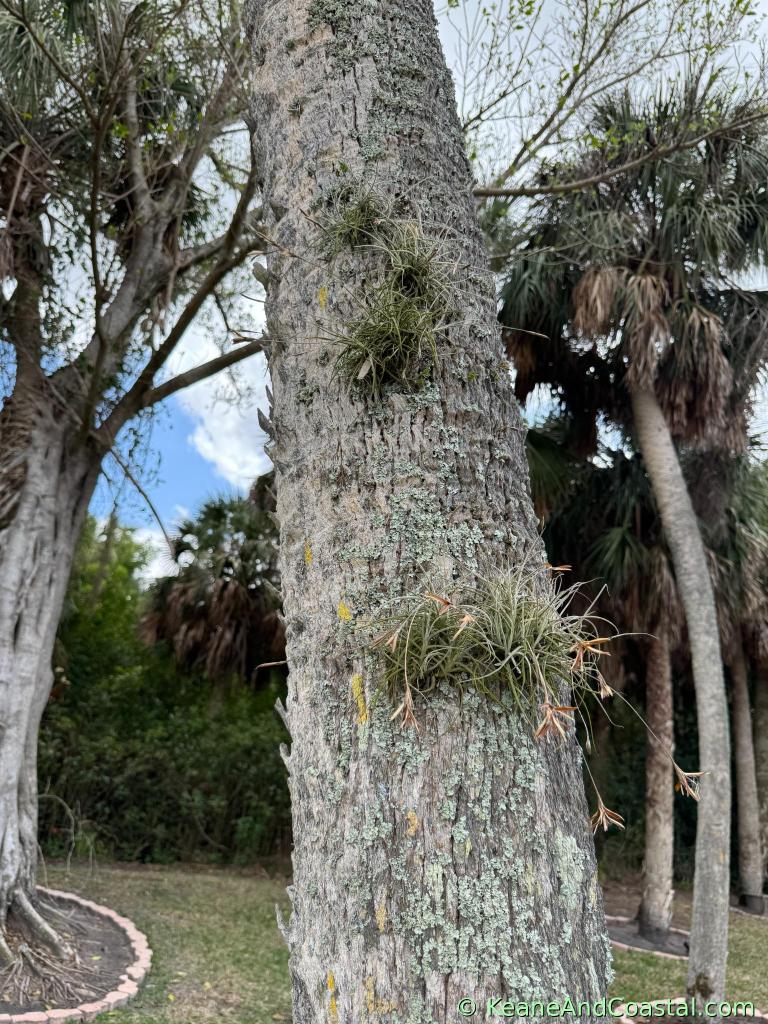
Identifying the Ball Moss Air Plant
One of the most distinctive features of the air plant are delicate orange flowers emerging from thin stems. Many Florida air plants bloom between late winter and spring. My photos for this post were taken March 1st.
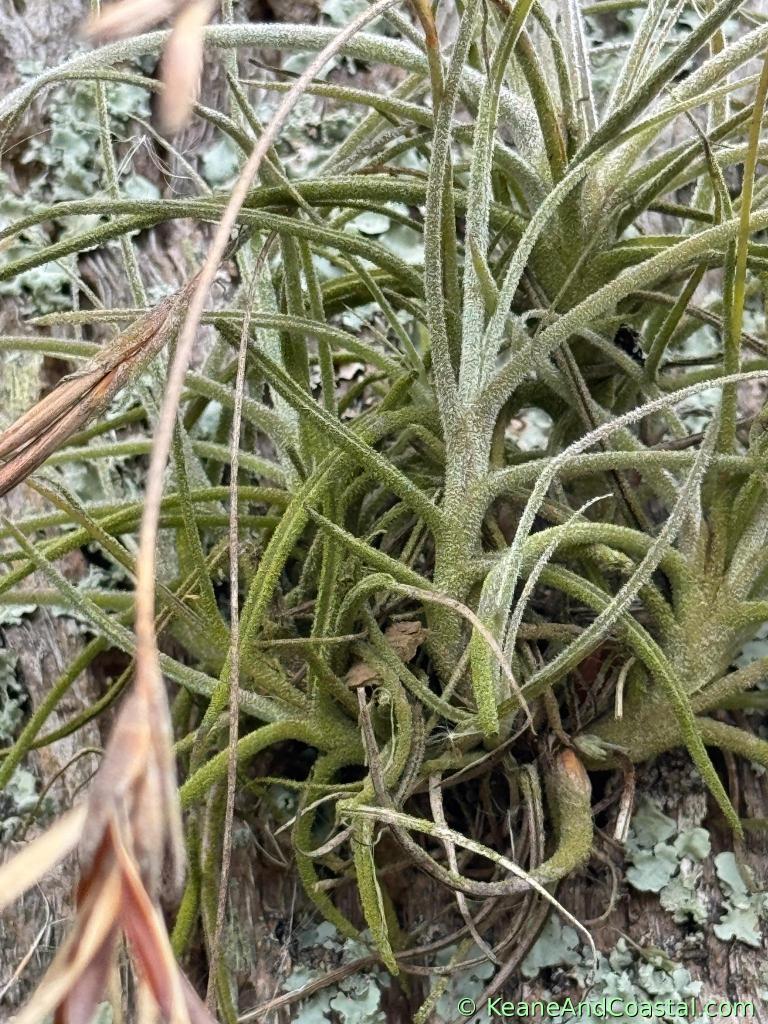
Their spikey tendrils are also a major identifying feature. You can see this is both the air plants, and the other type of moss that you’ll find on almost every type of tree- Spanish Moss. Also, not really moss!
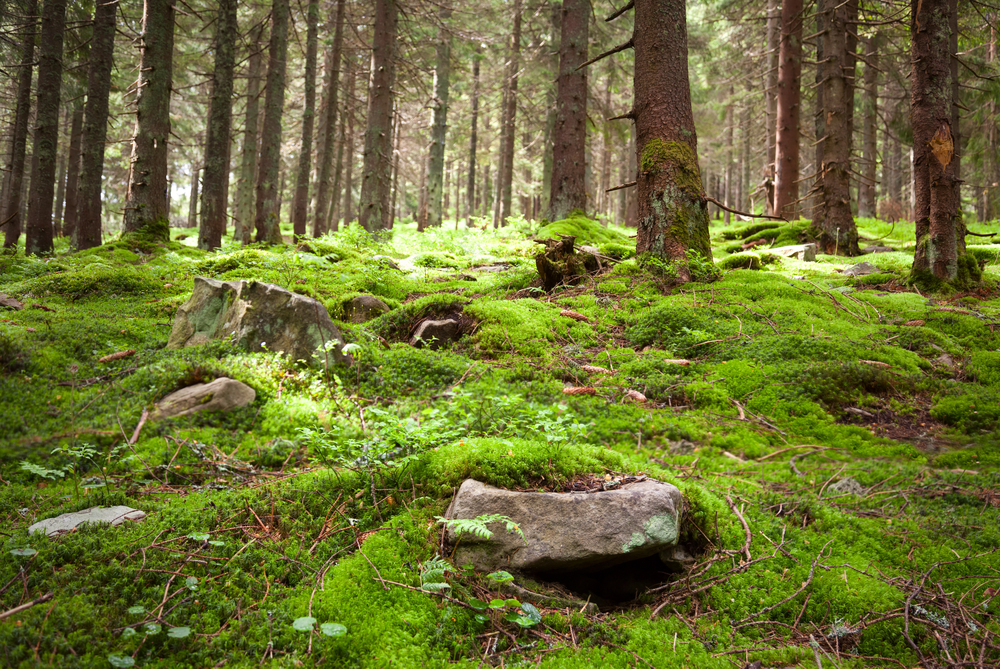
Ball moss air plants grow in round, spiky clumps attached to branches, while true moss grows as flat, dense mats hugging surfaces. The difference becomes obvious once you know what to look for.
Both are fascinating in their own way, but they belong to completely different groups of plants and survive in very different environments.
See true moss in the photo below:
Air Plant Life Cycle
Air plant flowers are often short-lived but beautiful. After blooming, the plant produces tiny seeds with silky fibers that act like parachutes. These seeds drift through the air and land on nearby branches, where new plants may begin to grow. That’s why you sometimes see clusters of them scattered across several trees in the same area.
Like most air plants, ball moss is monocarpic, which means each individual plant blooms only once during its lifetime. Once flowering and seed production are finished, the original plant slowly begins to age and decline.
This process can take months, sometimes even longer. The plant does not die immediately after blooming, but it gradually dries out and eventually breaks apart.
So, if you’ve ever tried to take one indoors and keep it alive, now you know it’s not your fault it died!
How Many Air Plants Grow Naturally in Florida?
Florida is actually one of the best places in the United States to see air plants in the wild. The state is home to about sixteen native species of Tillandsia.
Some of the most recognizable include:
- Spanish moss (Tillandsia usneoides)
- Ball moss (Tillandsia recurvata)
- Bartram’s air plant (Tillandsia bartramii)
- Cardinal air plant (Tillandsia fasciculata)
- Giant air plant (Tillandsia utriculata)
These plants thrive in Florida’s humid coastal climate, especially in areas with good air circulation like the Gulf Coast, and the barrier islands.
Why Some Florida Air Plants Are Endangered
While air plants may appear abundant in some areas, several native species are actually declining. The biggest threats are habitat loss, air pollution, and illegal collecting.
In the past, collectors removed large numbers of air plants from forests to sell as ornamental plants. Because some species grow slowly and depend on specific habitats, their populations dropped dramatically.
Today, many air plants are protected in Florida. Removing them from the wild without permission is illegal in many areas, especially in state parks and preserves.
Fortunately, most air plants sold in garden centers are now nursery-grown, which helps protect wild populations.
How to Grow Your Own Air Plants
If one of these plants falls from a tree during a storm or pruning, you can easily keep it alive.
Simply place or attach it to a piece of wood, bark, or driftwood where it receives bright, indirect light and good airflow. In humid climates like Florida, they may not need much additional care at all. A light misting occasionally during dry periods is usually enough.
Many gardeners mount them on decorative pieces to create natural displays or hanging garden features. But just remember, once it blooms, it will slowly dry up and die unless it can grow a new plant nearby.
A Tiny Piece of Florida’s Wild Beauty
Air plants are a reminder that Florida’s ecosystems are full of small, surprising wonders. What looks like a simple clump of greenery on a palm trunk is actually a highly specialized plant adapted to life in the air.
Once you start noticing them, you’ll likely see them everywhere—from oak branches in parks to the edges of coastal forests. Their delicate flowers and gravity-defying growth make them one of the most interesting native plants in the state.
Discover more from Keane & Coastal
Subscribe to get the latest posts sent to your email.
 Keane & Coastal
One thought on “What’s Growing on My Florida Trees? All About the Ball Moss Air Plant”