

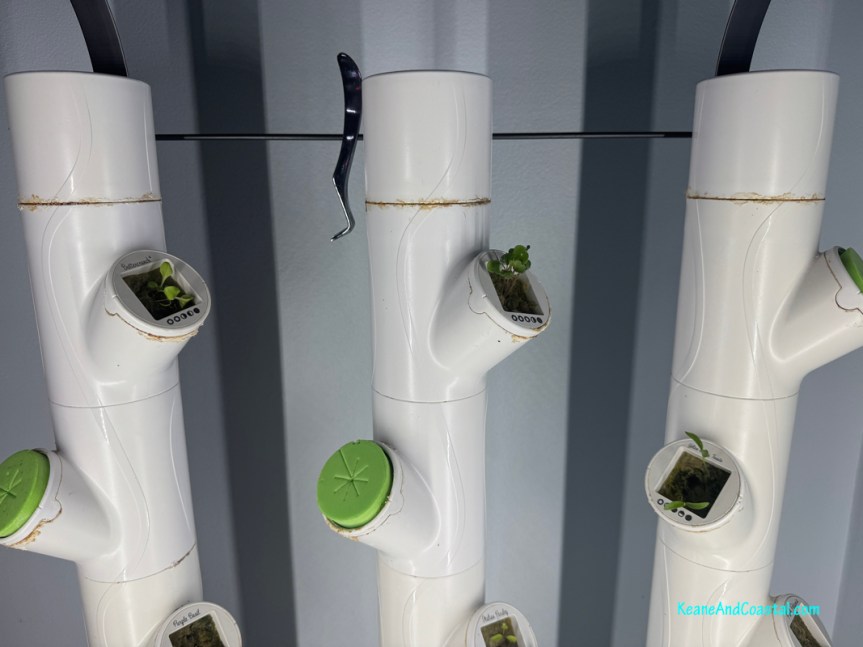
If you have a Gardyn system and suddenly notice a chalky, crusty white buildup on the yPods, tower, or around the water holes, you’re not alone.
That mysterious white crust on your Gardyn can look alarming at first, especially when you’ve worked hard to keep your indoor garden clean and productive. The good news is that it’s usually harmless and easy to manage.
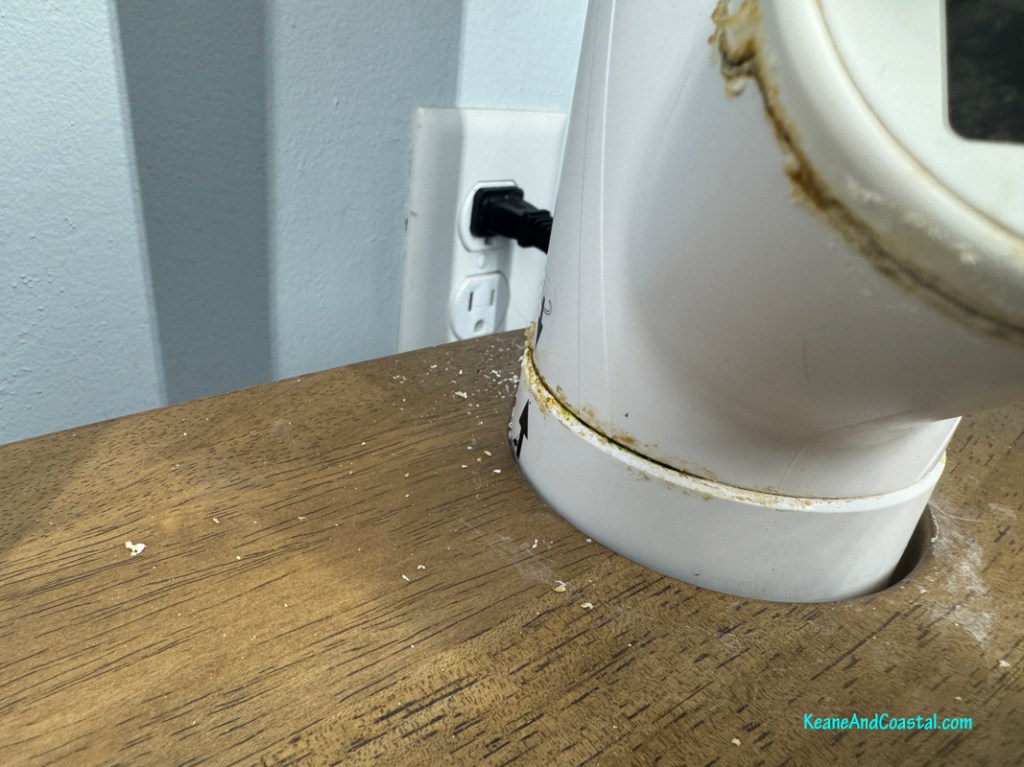
I took photos of what it looks like on mine, and this may be a more extreme case. I have very hard water and have had my Gardyn for about four years now.
So, if you are just starting to see the white crust, taking care of it now will help it not reach the point mine is at.
And if you are interested in purchasing a Gardyn click here to save 15% on the Gardyn website! (or coupon code rfcandy95010 at checkout)
What Is a Gardyn?
Gardyn creates vertical hydroponic growing systems designed for indoor use. Instead of soil, plants grow in pods and receive nutrients through a circulating water system.
It’s a sleek, high-tech way to grow herbs, greens, and vegetables year-round—perfect for anyone who loves fresh produce without relying on outdoor space.
And it usually looks nice and clean, unless you let it get crusty!
Because the system relies on water and nutrients, occasional mineral buildup is part of the territory.
So… What Is That Crusty White Stuff?
In most cases, that white, chalky residue is mineral buildup. Tap water often contains dissolved minerals like calcium and magnesium. When water evaporates, those minerals are left behind. Over time, they collect and dry into a visible white crust.
If you’re using nutrient solutions regularly (which you should be), some of the salts in those nutrients can also contribute to residue buildup, especially around:
- The tops of yPods
- Water distribution holes
- The reservoir lid
- The exterior edges of the tower
It may look unpleasant, but it’s usually just cosmetic.
Is It Mold?
This is the first question most growers ask. Mineral buildup is typically:
- Dry
- Chalky or powdery
- Hard and crusted
Mold, on the other hand, tends to look fuzzy, slimy, or web-like and may appear gray, green, or black. If what you’re seeing is dry and flaky, it’s far more likely to be mineral residue than mold.
If you ever notice a musty smell or fuzzy growth, that’s when you’ll want to investigate further.
Why It Happens More in Some Homes
The main factor is hard water. If your local water supply has high mineral content, you’ll see buildup faster. Homes with well water are especially prone to this.
Evaporation also plays a role. The more water that evaporates from exposed areas, the more minerals are left behind. Indoor heating or dry climates can speed this up.
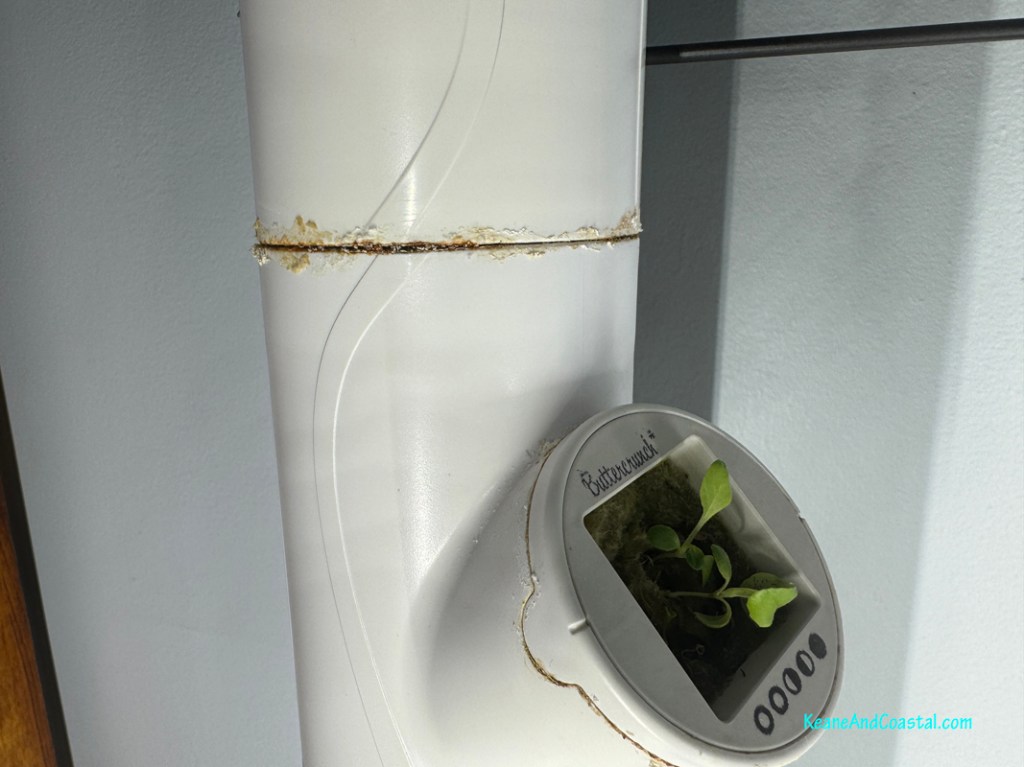
I took these pic before I cleaned it all off, so you can see how bad it can get.
Does It Hurt Your Plants?
Generally, no. A small amount of mineral buildup on surfaces won’t damage your plants. However, excessive accumulation around water openings could potentially restrict flow over time.
If left completely unmanaged for months, heavy salt deposits might interfere with nutrient delivery. Routine cleaning prevents this from becoming a problem.
How to Clean It Safely
Cleaning is simple and doesn’t require harsh chemicals.
Unplug your system before cleaning. Then:
- Use a soft cloth dampened with warm water
- For stubborn areas, use a diluted white vinegar solution
- Gently wipe away buildup
- Avoid abrasive scrubbers that could scratch surfaces
This will clean most of the white crust off of the pipes, yPods and other areas, but I have not been successful in removing 100% of it yet because my water is hard and the buildup is hard to fight.
Some articles will recommend using distilled water to reduce future mineral deposits, but the Gardyn instructions actually recommend tap water because it has nutrients and distilled water has none.
I usually only use distilled water for my carnivorous plants because they don’t like nutrients from the soil and water.
If you do use distilled water, you will need to add more calcium and magnesium to your water.
How to Prevent It
Regular reservoir cleaning according to your maintenance schedule keeps mineral and nutrient salt accumulation under control. If you have Kelby activated, your app will tell you when you should do a tank refresh.
Wiping visible moisture from exterior surfaces before it dries can also slow the formation of crusty patches.
When to Be Concerned
You should look closer if:
- The residue is slimy or fuzzy
- There is discoloration beyond white
- Plants show signs of stress like yellowing or wilting
- Water flow seems blocked
In most situations, though, the white crust is simply a byproduct of water chemistry—not a sign that your Gardyn is failing. And even though mine looks pretty bad, my Gardyn is still actually growing fine.
Discover more from Keane & Coastal
Subscribe to get the latest posts sent to your email.
 Keane & Coastal
One thought on “What is this White Crust on My Gardyn?”