

Wondering what to do after a freeze damages your tropical plants? Patience is the key! Read this North Florida guide to tropical plants recovery if your landscape was damaged in the winter freeze.
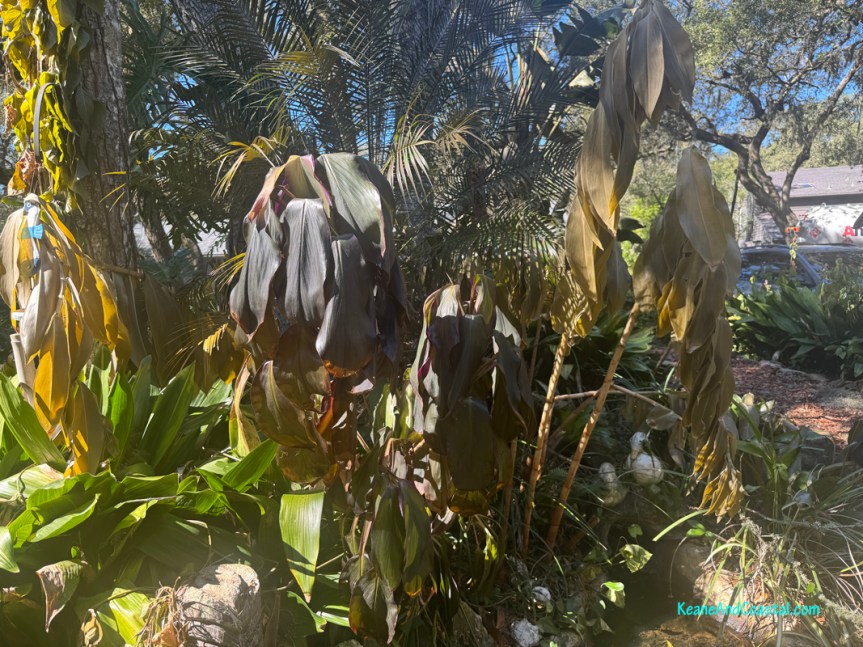
We’ve had a couple of mild winters, and my yard was looking lush and tropical before we got hit with a freeze several nights in a row. There’s only so much you can do with trying to cover plants when it’s your entire yard that needs protecting.
My first instinct is to run out there and start clearing away all the sad-looking, possibly dead plants. But I have to hold back, because it may look bad, but those dead parts are protecting the plant from further damage.
In the Jacksonville and greater North Florida area, freezes tend to be brief but sharp. That combination is tough on tropical and subtropical plants that thrive most of the year, then suddenly face overnight temperatures below freezing.
After a cold snap, gardens often look rough—blackened leaves, limp stems, and plants that appear completely lost. The good news is that many of these plants are more resilient than they look.
Before grabbing the pruners, it helps to understand how freeze damage works and why patience usually pays off.
After a Freeze, Don’t Rush to Clean Up
After a freeze, dead-looking foliage can actually protect living tissue underneath. Those damaged leaves and stems act like insulation, shielding the crown and roots from additional cold nights that often follow in North Florida winters.
In most cases, it’s best to leave plants alone until the danger of frost has passed—usually late February to early March in the Jacksonville area. Cutting too early can expose tender growth and make the plant more vulnerable if another cold front rolls through.
Specific Plant Guide
Banana Trees: Ugly but Often Alive
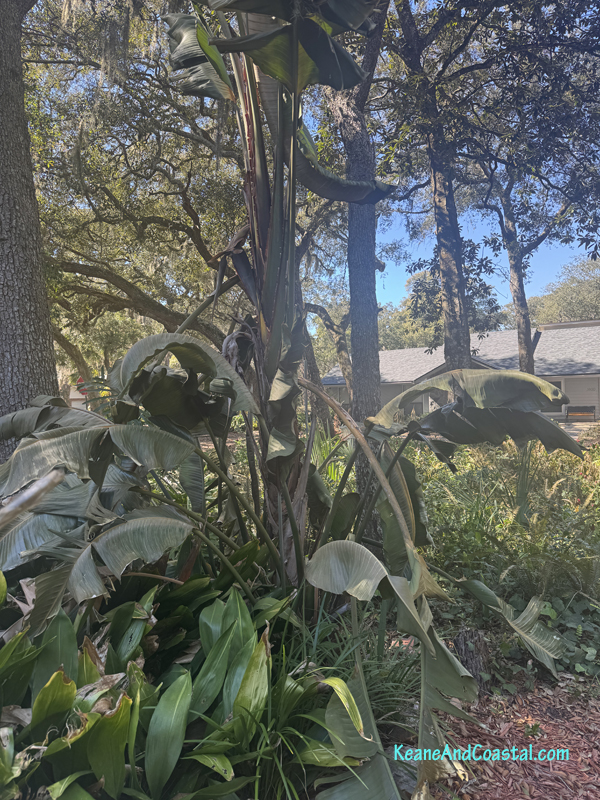
Banana trees almost always look terrible after a freeze. Leaves turn black and collapse, and the trunk may soften or discolor. This is normal. In North Florida, bananas typically die back to the ground during hard freezes, but the underground corm often survives.
Leave the damaged trunk in place until spring. Once consistent warm weather returns, you can cut it back to firm, healthy tissue or all the way to the ground. New shoots, called suckers, usually emerge quickly once soil temperatures rise.
You’ll usually see two types:
- Sword suckers have narrow, upright leaves and a strong connection to the corm. These are the healthiest and most likely to produce a mature plant.
- Water suckers have broader, softer leaves and a weaker attachment. They grow fast but are less reliable long-term.
It’s best to keep one or two strong sword suckers and remove the rest so the plant’s energy is focused on growing the strongest shoots instead of scattered.
Plumeria: Patience Is Everything
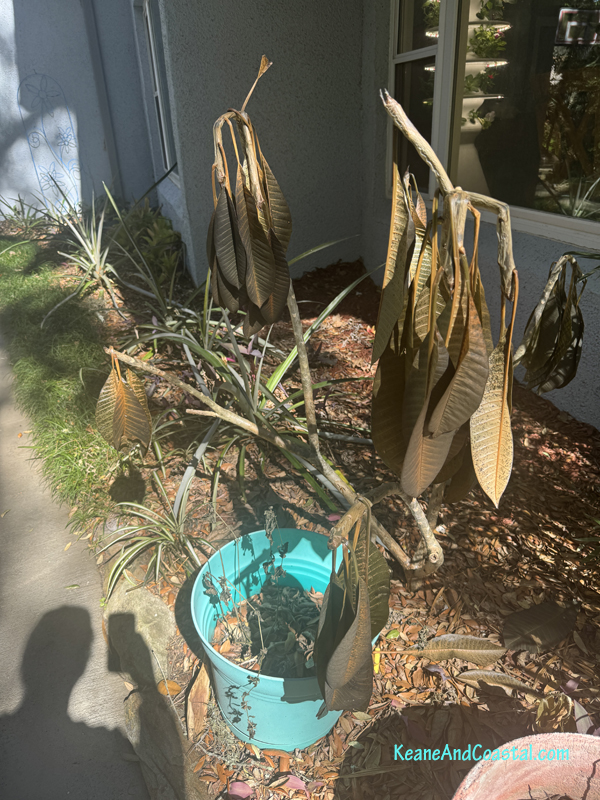
Plumeria can look deceptively dead after cold exposure. Branches may wrinkle or darken, but that doesn’t always mean the plant is gone. Resist pruning stems, but removing the dead leaves is OK.
Wait until spring and check the stems—healthy wood will be firm and green inside when lightly scratched.
Remove only the sections that are clearly mushy or brittle once new growth starts. Cutting too early can remove viable branches that would have leafed out later.
Pineapple Plants: Leave the Core Alone
Pineapple plants are surprisingly cold-tolerant compared to their tropical look. Outer leaves may brown or collapse, but the central growing point is what matters most.
Avoid trimming until you see new growth emerging from the center. If the core remains solid, the plant often recovers on its own. Remove dead outer leaves gradually in spring for airflow and appearance.
Spiral Ginger and Bird of Paradise: Expect Dieback
Both spiral ginger and bird of paradise typically experience top dieback in North Florida freezes. Leaves and stems may turn brown or translucent, but underground rhizomes often survive.
Leave damaged growth in place through winter. Once spring temperatures stabilize, cut back dead stems at ground level. Fresh shoots usually appear once the soil warms.
However, the giant bird of paradise (those big 10’+ tall ones) should not be cut back to the ground after a freeze. Prune only what is clearly dead once new growth appears.
Hibiscus: Wait for Signs of Life
Hibiscus can be tricky after a freeze. Branches may look lifeless, but the plant often rebounds from the base or lower stems. Hold off on pruning until new growth appears.
In early spring, trim back only what clearly failed to leaf out. This approach helps avoid cutting living wood that simply needed more time.
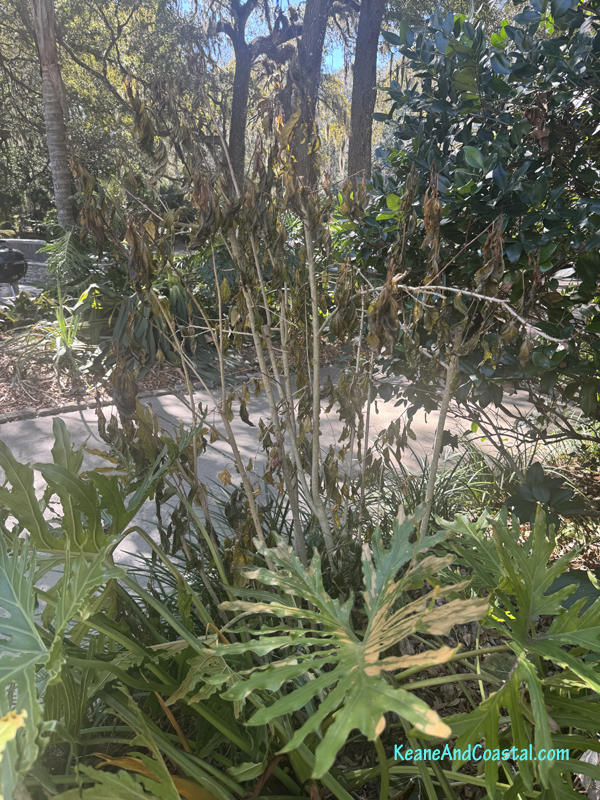
Palm Trees: Hands Off the Crown
Palms should never be aggressively pruned after a freeze. Browning fronds may look unsightly, but they protect the growing point at the top of the trunk.
Do not cut fronds until you are sure they are completely dead and no further freezes are expected. If the spear leaf (the center growth) remains intact, the palm has a good chance of recovery.
Philodendrons and Hawaiian Ti: Protect the Roots
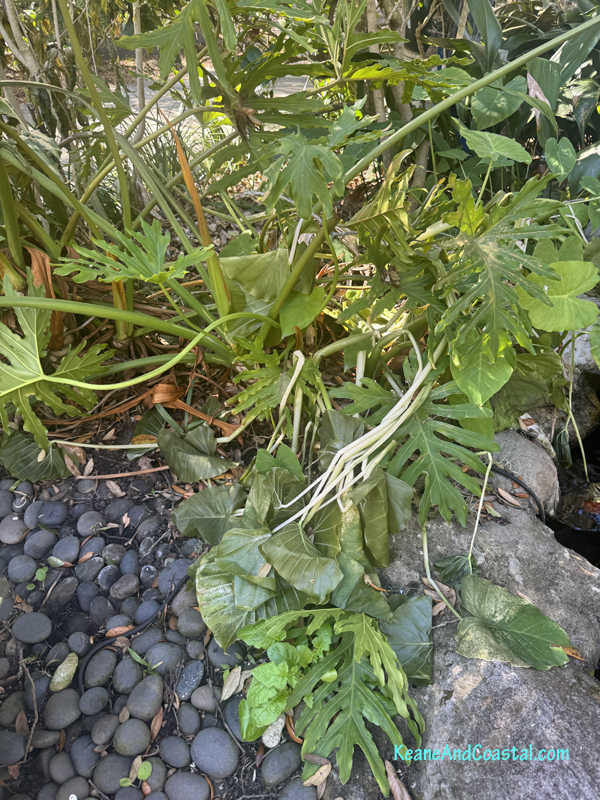
These plants often suffer leaf damage first, especially in exposed locations. Leaves may melt or turn black, but roots frequently survive mild freezes.
Leave damaged foliage in place until spring, then remove it once new growth begins. Mulching around the base can help protect roots during late-season cold snaps.
Sea Lily: Coastal-Tough but Freeze-Sensitive
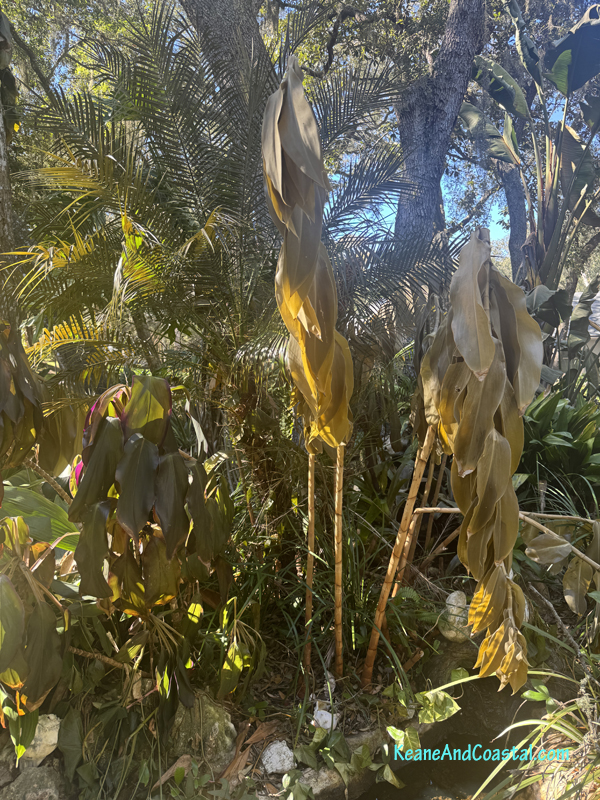
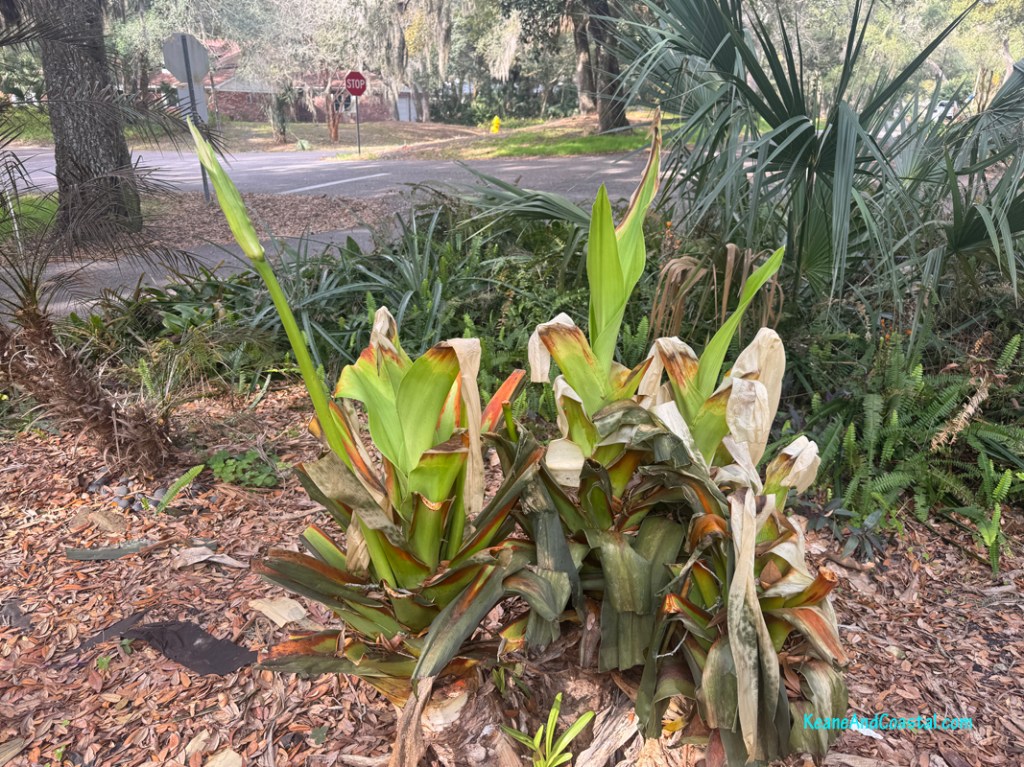
Sea lilies handle North Florida’s salty air and sandy soils well, but a hard freeze can still damage their foliage. After cold exposure, leaves may yellow, brown, or collapse entirely, which can look worse than it actually is. Ours took the route of total collapse.
Resist the urge to cut sea lilies back right away. The damaged leaves help protect the bulb below ground from additional cold snaps.
When new growth begins to emerge, trim away dead or mushy foliage at the base. If the bulb stayed firm, sea lilies typically rebound quickly with fresh, upright leaves as the weather warms.
Staghorn Ferns: Ignore the Ugly Phase
Staghorn ferns often look alarming after cold weather, with brown or black fronds. The shield fronds at the base are the most important part to protect.
Avoid removing damaged fronds until warmer weather returns. If the base remains firm, new fronds often emerge once temperatures stabilize.
Spring Is the Real Test
In North Florida gardens, freeze recovery is often slow. Some plants won’t show signs of life until well into March or April. Even though they may look sad, waiting allows you to see what truly survived and prevents unnecessary damage.
Once spring growth begins, clean up dead material, fertilize lightly, and water consistently. Many tropical plants bounce back stronger than expected, even after a rough winter.
A freeze can be discouraging, but in the Jacksonville area, it’s usually just a setback—not the end of your tropical garden. I’ve experienced this many times since moving here, and our yard always bounces back.
Signs of Life! Update 10 Days Later
About 10 days later, signs of life are already showing in the Sea Lilies! You can see where they are all dead, and we cut away the dead leaves. New bright green leaves are already popping out!
Everything else is slowly coming back to life, but these have been the most noticeable.
Discover more from Keane & Coastal
Subscribe to get the latest posts sent to your email.
 Keane & Coastal
One thought on “What to Do After a Freeze: A North Florida Guide to Tropical Plant Recovery”