

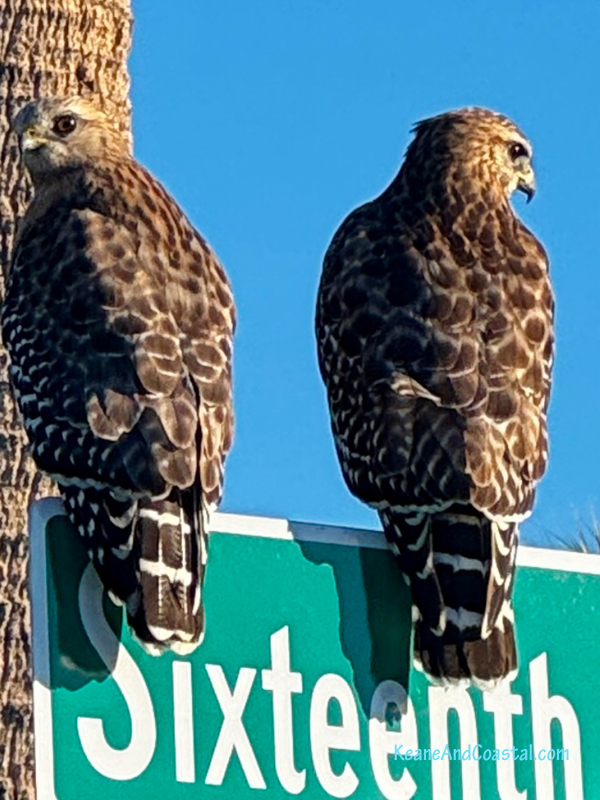
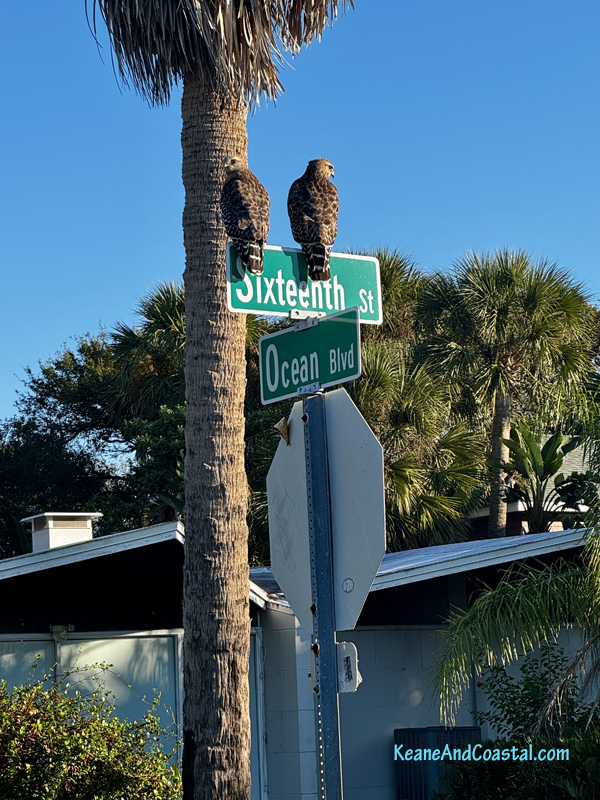
I was driving home on Ocean Blvd. in Atlantic Beach and spotted two very majestic-looking birds on a street sign. I later learned they were red-shouldered hawks, are the most common raptors in the state.
If you spend time near wetlands, wooded neighborhoods, or forest edges in Florida, you might have heard the sharp, ringing call of a red-shouldered hawk before you ever spotted one. These medium-sized hawks are year-round residents, making them a familiar sight in our neighborhood of oak trees.
Florida’s red-shouldered hawks are particularly interesting because they belong to a subspecies adapted to the Southeast, thriving in the state’s warm climate and diverse habitats.
How to Identify a Red-Shouldered Hawk
Red-shouldered hawks are easier to recognize once you know what to look for. Adults have rich reddish-brown barring across the chest and belly, which gives them a warm, rust-colored appearance. Their shoulders and upper wings show the reddish tones that inspired their name, especially visible when perched or taking flight.
The back is dark brown with pale spotting, and the tail is boldly banded with black and white stripes. When flying overhead, their wings appear broad and rounded, with translucent pale patches near the wingtips that can glow in sunlight. Juveniles look different, with streaked brown underparts and less vivid coloring, but they still share the same stocky build and wing shape.
Their call is another strong clue. The repeated, high-pitched “kee-ahhh” often echoes through Florida forests and is one of the most recognizable hawk sounds in the region.
You can hear the hawk call in the video below. As soon as I heard it, I realized how often I do hear these hawks:
Where Red-Shouldered Hawks Live in Florida
Red-shouldered hawks prefer wooded areas with nearby water, which Florida offers in abundance. You’ll commonly find them in hardwood forests, swamps, river floodplains, and wet pine woods. They also adapt well to suburban neighborhoods, especially those with mature trees, retention ponds, or small wetlands.
Unlike some raptors that migrate long distances, red-shouldered hawks stay in Florida all year. Many pairs establish territories and remain loyal to the same nesting areas for years, making them dependable neighbors in the same stretches of forest or green space.
What Do Red-Shouldered Hawks Eat?
These hawks have a varied diet and are opportunistic hunters. In Florida, they commonly feed on small mammals like mice and squirrels, as well as frogs, snakes, and lizards. Wetland areas provide a steady supply of amphibians, which are a favorite food source.
They also eat birds, large insects, and crayfish when available. Red-shouldered hawks often hunt by perching quietly and scanning the ground below before swooping down to grab prey. This sit-and-wait style is well suited to forested and wet environments.
Nesting and Breeding Behavior
Breeding season in Florida typically begins earlier than in northern states, often starting in late winter. Red-shouldered hawks build large stick nests high in trees, usually near water. Both males and females help construct the nest and care for the young.
Females lay two to four eggs, which hatch after about a month of incubation. The chicks remain in the nest for several weeks before fledging, and even after leaving the nest, they may stay nearby while learning to hunt and survive on their own.
Key Characteristics and Behavior
Red-shouldered hawks are known for being vocal and territorial. They frequently call while perched or soaring, especially during breeding season. Their alert behavior and loud cries often give away their location before they’re seen.
Compared to other hawks, they are relatively tolerant of human presence, which explains why they’re commonly spotted in parks, neighborhoods, and near walking trails. They play an important role in the local ecosystem by helping control populations of rodents, reptiles, and insects.
Red-Shouldered Hawks vs. Similar Species
In Florida, red-shouldered hawks are sometimes confused with red-tailed hawks. The easiest way to tell them apart is size and habitat. Red-shouldered hawks are smaller, more slender, and favor wooded wetlands, while red-tailed hawks are larger and more often seen soaring over open fields and highways.
Their calls also differ noticeably. Red-shouldered hawks have a sharper, repeated cry, while red-tailed hawks produce a longer, raspier scream often used in movies and television.
Spotting Red-Shouldered Hawks in the Wild
To increase your chances of seeing one, look for them perched on tree branches along forest edges or near water. Early morning and late afternoon are active times, especially when they’re hunting or calling.
Listening is just as helpful as watching. Once you recognize their call, you’ll start noticing how common they really are across Florida’s landscapes!
Red-shouldered hawks are a defining part of Florida’s wildlife, blending bold presence with everyday familiarity. Whether heard echoing through a swamp or seen perched above a suburban street, they are a reminder of how closely nature and daily life intersect in the Sunshine State.
Discover more from Keane & Coastal
Subscribe to get the latest posts sent to your email.
 Keane & Coastal
One thought on “Red-Shouldered Hawks in Florida: A Familiar Forest Raptor”