


I’ve started giving edible flowers a try in my Gardyn hydroponic stand, and my Black Viola flowers are now blooming, and they are delicious! Read on to learn about these beautiful black flowers, with tips on growing and using them in cooking.

What Is a Black Viola Flower?
The Black Viola flower looks like it belongs in a gothic fairytale garden. With petals so deep they appear nearly black—often a velvety mix of midnight purple, eggplant, or charcoal—this striking bloom is both ornamental and edible. Beyond its dramatic appearance, Black Viola offers surprising versatility for gardeners, hydroponic growers, and adventurous home cooks.
Black Viola is a cultivar within the viola family, closely related to pansies. While true black flowers are rare in nature, these violas achieve their near-black look through intense pigmentation. They thrive in cooler temperatures, bloom generously, and are often grown for decorative beds, containers, and culinary use.
Growing Black Viola Flowers
Black Viola prefers mild weather and does best in spring and fall. It enjoys rich, well-draining soil with consistent moisture. Full sun to partial shade works well, especially in warmer climates where afternoon shade helps preserve flower color and plant health. Regular deadheading encourages more blooms and keeps plants tidy.
Black Violas have shallow roots and adapt surprisingly well to hydroponic systems, so you can grow them anytime if you have a Gardyn or similar set-up.
I started these Black Violas from Gardyn’s yCubes. And if you are interested in purchasing a Gardyn Click here to save $100 on the Gardyn website! I have the Gardyn Home size, but they also offer a smaller Gardyn Studio.

The image above is actually of my Black Violas in my Lettuce Grow farm stand. I often start plants in my Gardyn from seeds, then move them to my Lettuce Grow.
Hydroponic Growing Tips
Cooler water temperatures help mimic the plant’s natural preference for mild conditions. A balanced nutrient solution designed for flowering plants encourages healthy blooms while keeping leaf growth compact.
Adequate airflow is important in hydroponic setups to prevent moisture-related issues, especially around the crown of the plant.
Because violas are light feeders, it’s better to err on the side of lower nutrient strength and adjust gradually. LED grow lights with a balanced spectrum help maintain deep petal coloration when growing indoors.
Are Black Viola Flowers Edible?
Yes! Black Viola flowers are edible and have been used in culinary applications for centuries. Both the petals and leaves can be consumed, although the flowers are most commonly used.
The flavor of Black Viola is mild and slightly sweet with a faint wintergreen note. It’s subtle rather than overpowering, which makes it ideal for both sweet and savory dishes.
They also provide nutritional value, supplying vitamins A and C, as well as anthocyanins.
Anthocyanins are natural plant pigments that give flowers, fruits, and vegetables their red, purple, and blue colors. They also act as antioxidants, helping protect plant cells and offering potential health benefits when eaten.

How to Use Black Violas in Food
Black Viola flowers are often used as edible garnishes, but they offer more than just visual appeal. Fresh petals add elegance to salads, cheese boards, and plated desserts. Their dark color creates striking contrast against lighter foods like goat cheese, vanilla desserts, or citrus-based dishes.
They can be crystallized with egg white and sugar for cake decorations, frozen into ice cubes for cocktails, or pressed into shortbread and butter cookies. In savory cooking, Black Viola works well scattered over risotto, soups, or soft cheeses just before serving.
Because the flavor is delicate, it’s best to add the flowers at the end of preparation rather than cooking them extensively. This preserves both taste and color.
My favorite way to use them is on top of salads. They look so pretty and have a great, delicate flavor. And it’s just fun to eat flowers! Be sure to put them on after you put on your salad dressing.

Harvesting and Storage Tips
Harvest Black Viola flowers that are fully open blooms with vibrant color. They are best enjoyed fresh but can be stored briefly in the refrigerator in a breathable container lined with a paper towel.
I like to snip them off as I need them
Why Gardeners and Chefs Love Black Viola
Black Viola offers a rare combination of beauty, usability, and adaptability. It fits seamlessly into ornamental gardens, hydroponic setups, and edible landscapes. Whether grown for its dramatic aesthetic or its culinary charm, this flower proves that dark and moody can still be delicious.
If you’re looking to grow something that sparks conversation and elevates your plate, Black Viola is a great addition to your garden.
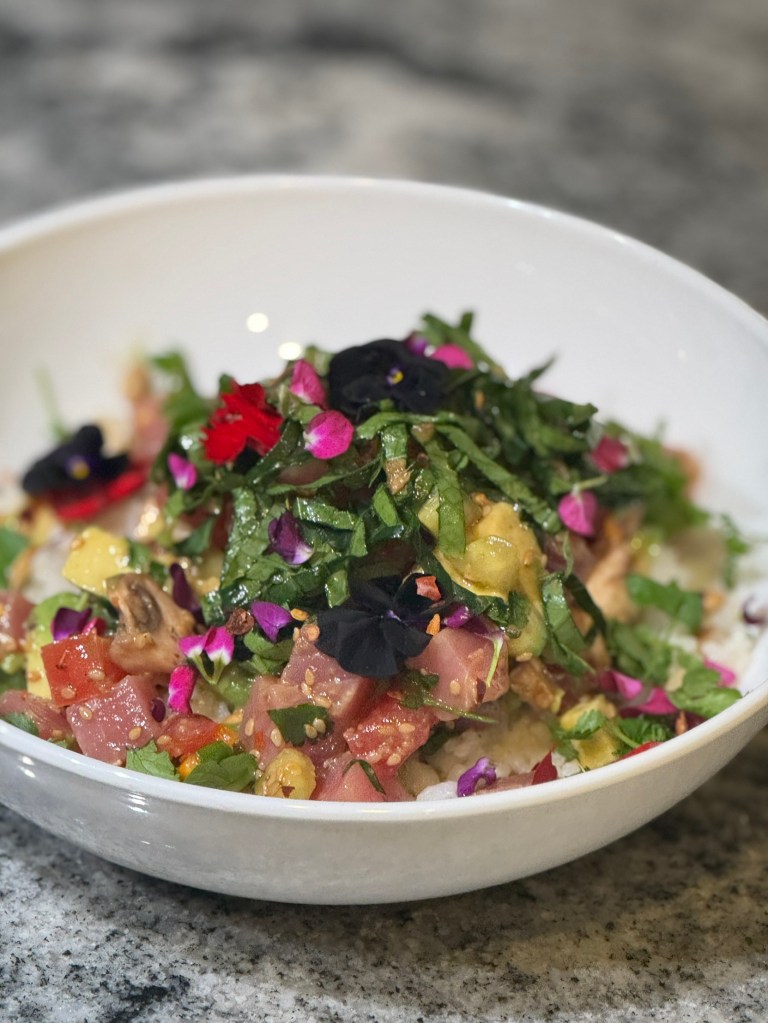
Last Night’s Dinner- Tuna Poke with Edible Flowers and Flower Petals
Flowers make any meal prettier! This is tuna poke with Black Viola flowers and flower petals from pink and purple Hot Cakes Stock flowers.
Discover more from Keane & Coastal
Subscribe to get the latest posts sent to your email.
 Keane & Coastal
2 thoughts on “Eating Black Viola Flowers: Growing and Cooking with this Dark Beauty”