


Yesterday I spotted a strange little cocoon hanging from a leaf, and saw it start wiggling. Then a little worm popped out of the top and went back in. I had just seen my first bagworm!
At first glance, these mini mummies seem harmless, but inside that tiny, camouflaged case is a voracious caterpillar just waiting to turn your favorite plants into lunch.
What Exactly Is a Bagworm?
Bagworms are the larvae of moths from the family Psychidae. They get their name from the “bags” they build — silken cases made of twigs, leaves, and other debris — which serve as both camouflage and protection. While they’re small (usually under 2 inches), they’re stealthy. You’ll often find their hanging cocoons blending perfectly with your shrubs or trees.
When the larvae hatch, they immediately start feeding and building their protective bag, which they carry around like a snail shell. Once they pupate, males emerge as moths, while females typically remain in their bags to lay eggs — up to 1,000 of them — setting the stage for next season’s invasion.
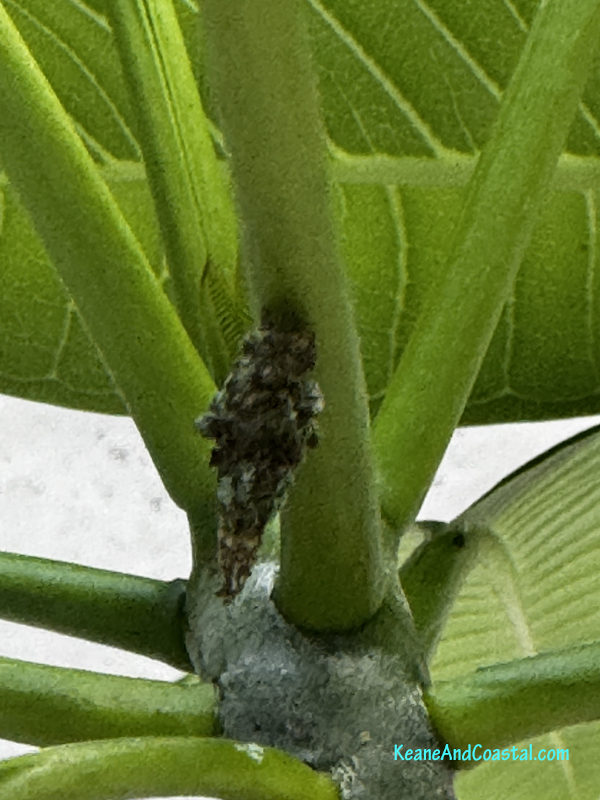
This is the one I found on my plant. You can also see a video of it in action at the end of the post:
Where Are Bagworms Found?
Bagworms are common throughout the southeastern United States, and yes — Florida is prime real estate for them. They thrive in warm, humid climates and are often found on ornamental trees, shrubs, and evergreens. Common Florida hosts include junipers, cypress, cedar, and even oak or palm trees if the infestation is heavy enough. I found mine on our Plumeria.
You’ll typically spot them from late spring through fall, dangling like tiny ornaments that nobody asked for.
Why Are Bagworms Considered Pests?
Despite their crafty disguises, bagworms are bad news for your landscaping. These caterpillars feed on foliage, needles, and even bark, stripping plants of their ability to photosynthesize. A heavy infestation can defoliate trees, leading to stunted growth or even death if left untreated.
For Florida homeowners who love their lush, tropical greenery, that’s a serious problem. And because the bags blend so well, infestations often go unnoticed until the damage is already done.
How to Get Rid of Bagworms
1. Hand Removal (Small Infestations)
The simplest method? Pluck them off by hand. Drop the bags into soapy water to kill the larvae or eggs inside. This works best during fall or winter before new larvae hatch.
2. Pruning Affected Branches
If a shrub or tree section is heavily infested, pruning can remove most of the problem in one go. Dispose of the clippings properly — don’t just toss them in your yard waste pile.
3. Biological Control
If you prefer an eco-friendly option, consider releasing beneficial insects like Trichogramma wasps or using Bacillus thuringiensis (Bt), a naturally occurring soil bacterium that targets young caterpillars without harming other wildlife.
4. Insecticides (Last Resort)
For severe infestations, a targeted insecticide containing spinosad or permethrin can be used, ideally applied in early summer when larvae are small and actively feeding. Always follow label directions and try to avoid broad-spectrum sprays that harm beneficial bugs.
Neat but Not Good for Your Yard
Bagworms are neat to watch — until they start munching on your landscaping. Florida’s climate makes it easy for them to thrive, but with quick action and a keen eye, you can stop them before they turn your trees into their personal buffet.
So next time you spot a weird hanging “pinecone” that doesn’t belong, don’t just admire it — check for movement. You might have a freeloading bagworm ready to make your garden its next Airbnb.
My Bagworm Video on Instagram:
My video is a little fuzzy, but you can totally see the little caterpillar coming in and out at the top.
Discover more from Keane & Coastal
Subscribe to get the latest posts sent to your email.
 Keane & Coastal
One thought on “What Are Bagworms? The Tiny Hitchhikers You Don’t Want in Your Florida Yard”