

If you have a hydroponic garden, you know the joys of fresh, homegrown produce year-round. But when your system produces more than you can eat or give away, it’s easy to feel overwhelmed. Rather than letting that excess go to waste, freezing is a fantastic way to preserve your harvest for future use.
Many people know that fruits and vegetables can be frozen, but you might be surprised at just how many foods freeze well—including delicate herbs, citrus zest, and leafy greens.
Freezing not only helps prevent waste but also locks in nutrients, making it a practical and cost-effective way to keep enjoying your hydroponic harvest long after picking.
Here’s how to properly freeze herbs, greens, and vegetables, how long they last, and creative ways to use them in meals.
Freezing Fresh Greens and Herbs: Preserve Flavor and Aroma
Freezing herbs instead of drying them helps retain their fresh flavor, vibrant color, and nutritional value. While drying is a traditional preservation method, it can cause herbs to lose some of their essential oils and aroma, making them less potent in recipes.
Freezing locks in these flavors, making it a better option for delicate herbs like basil, cilantro, parsley, and chives, which tend to lose their potency when dried. Additionally, frozen herbs can be used immediately in cooking without rehydration, especially when frozen in oil or water cubes.
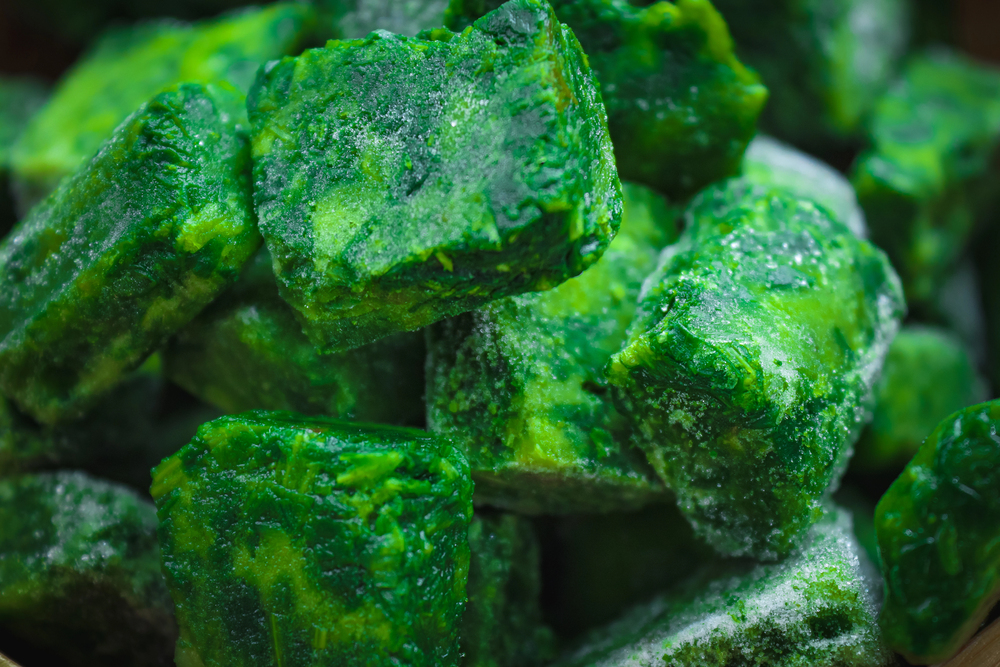
And freezing is a great way to preserve your dark leafy greens you use in cooking like kale, spinach and my favorite, green tatsoi.
Best Methods for Freezing Herbs and Greens
Chopped and Frozen in Ice Cubes
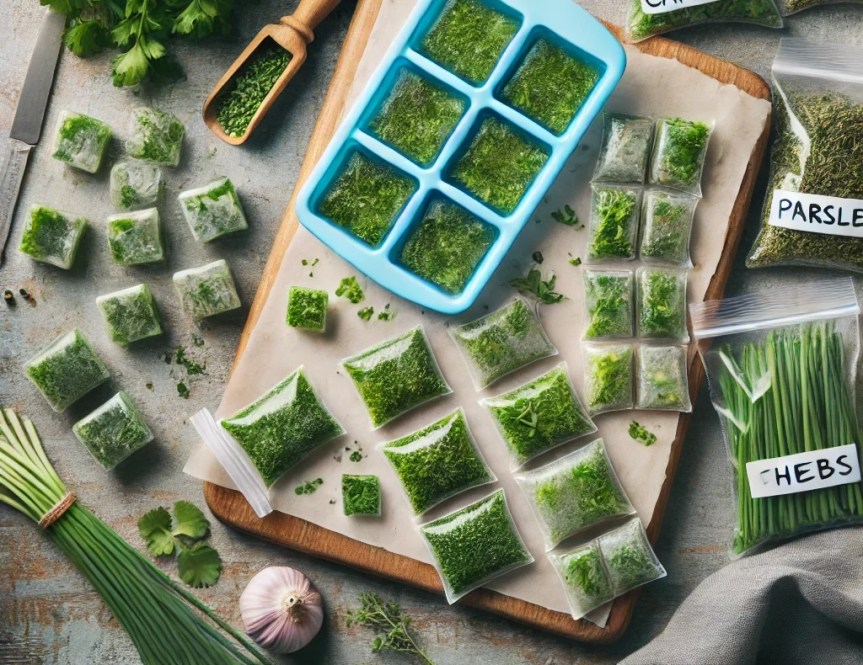
The ice cube method works best for herbs and can be done using water or olive oil. You might be surprised how much each cube can hold!
When choosing between water or oil, think about how you’ll be using it in the end. Some things you may not want to add olive oil to.
- Chop the herbs finely.
- Pack them into an ice cube tray, filling each section about halfway.
- Cover with water or olive oil, then freeze until solid.
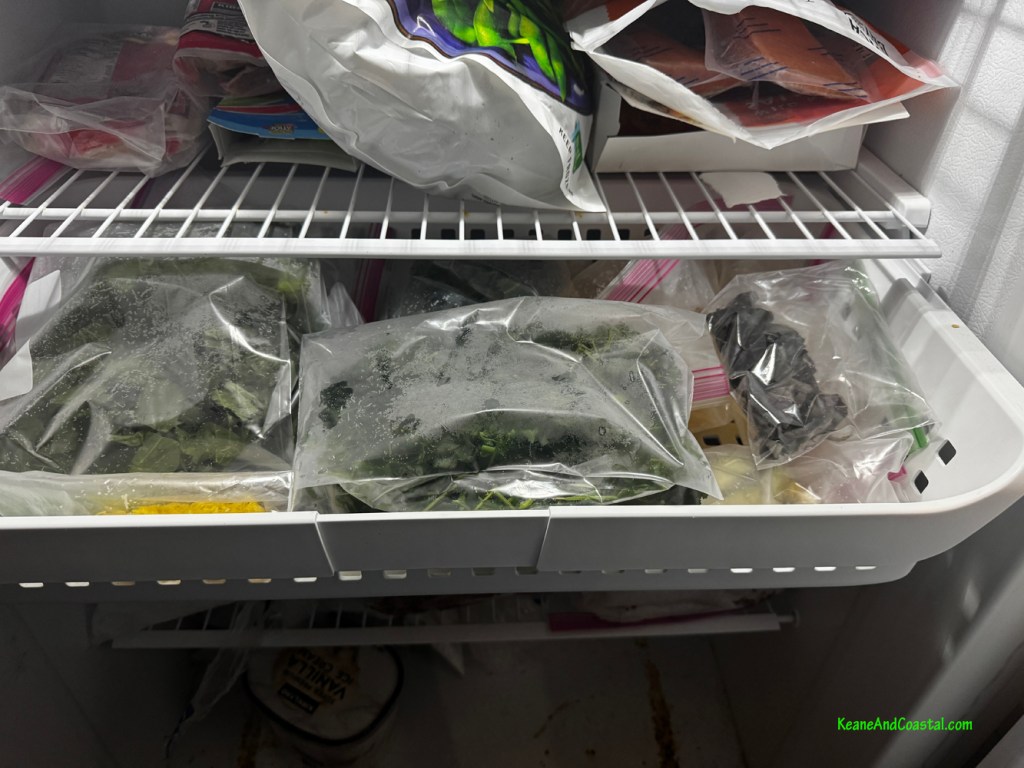
- Once frozen, pop them out and store in a labeled freezer bag.
- Use directly in soups, stews, or sautés—no need to thaw!
Whole Leaf Freezing
Whole leaf freezing works great for both greens and herbs. It does the best job of preserving them so you can use them almost as if they were freshly picked. This method had actually become my favorite!
- Pick herbs and greens and chop them how you would normally use them.
- Lay them in a single layer on a baking sheet. Cover the baking sheet with parchment paper first for easy removal.
- Quick freeze for about 30 – 45 minutes, then transfer to an airtight container or freezer bag.
Most frozen herbs stay fresh for 6-12 months, though they are best used within 3-6 months for optimal flavor.
Do I Need to Blanch My Greens Before Freezing?
I always read about blanching greens before you freeze them, and I found I prefer not to do that! But, there are some greens that may retain a better texture this way. It also makes them last a bit longer than fresh frozen, up to 12 months.
It’s a matter of personal preference, so if you want to blanch them, here’s how.
- Bring a pot of water to a boil.
- Drop greens into boiling water for 30 seconds to 2 minutes (depending on the variety).
- Immediately transfer to an ice bath to stop the cooking process.
- Drain well and pat dry before freezing.
Vegetables That Freeze Well
Not all vegetables freeze equally well, but many hydroponic-grown veggies retain great texture and flavor if frozen properly. Here are some vegetables that freeze well and how to prepare them:
Peppers (Bell Peppers, Jalapeños, and More)
- Slice, dice, or cut into strips.
- Freeze raw—no blanching needed!
- Store in portioned freezer bags and use in stir-fries, omelets, or fajitas.
- Freezer life: 10-12 months
Zucchini and Summer Squash
- Shred and freeze for baking (great for zucchini bread or muffins).
- Slice and blanch for 1-2 minutes before freezing for stir-fries or soups.
- Freezer life: 8-12 months
Tomatoes
- Freeze whole, chopped, or pureed—perfect for sauces and soups.
- The texture will soften after freezing, so they’re best used in cooked dishes.
- Freezer life: 8-12 months
Green Beans
- Trim ends, blanch for 3 minutes, then freeze in portioned bags.
- Best for stir-fries, soups, or steaming.
- Freezer life: 10-12 months
Broccoli and Cauliflower
- Cut into florets and blanch for 3-5 minutes before freezing.
- Use in roasted dishes, soups, or casseroles.
- Freezer life: 10-12 months
How to Use Frozen Produce
Once you have your frozen stash, it’s time to put it to good use. Here are some easy ways to incorporate frozen herbs, greens, and vegetables into everyday meals:
- Frozen spinach or kale: Toss into smoothies, soups, or pasta dishes.
- Frozen herb cubes: Drop directly into stews, sauces, or sautés.
- Frozen zucchini: Add to muffins, pancakes, or stir-fries.
- Frozen tomatoes: Cook down into homemade pasta sauce.
- Frozen peppers: Use in tacos, fajitas, or casseroles.
- Frozen citrus zest: Sprinkle over roasted vegetables or mix into dressings.
Get Freezing
If your hydroponic garden gives you more than you can handle, don’t let it go to waste! Freezing is a simple and effective way to extend the life of your herbs, greens, and vegetables while maintaining their flavor and nutritional value.
By using the right freezing methods, you’ll have a supply of garden-fresh ingredients ready to use in your favorite meals, even in the off-season.
Next time you find yourself with an overflowing harvest, grab some freezer bags and get preserving!

Discover more from Keane & Coastal
Subscribe to get the latest posts sent to your email.
 Keane & Coastal
2 thoughts on “Foods You Can Freeze When Your Hydroponic Garden Overproduces”