

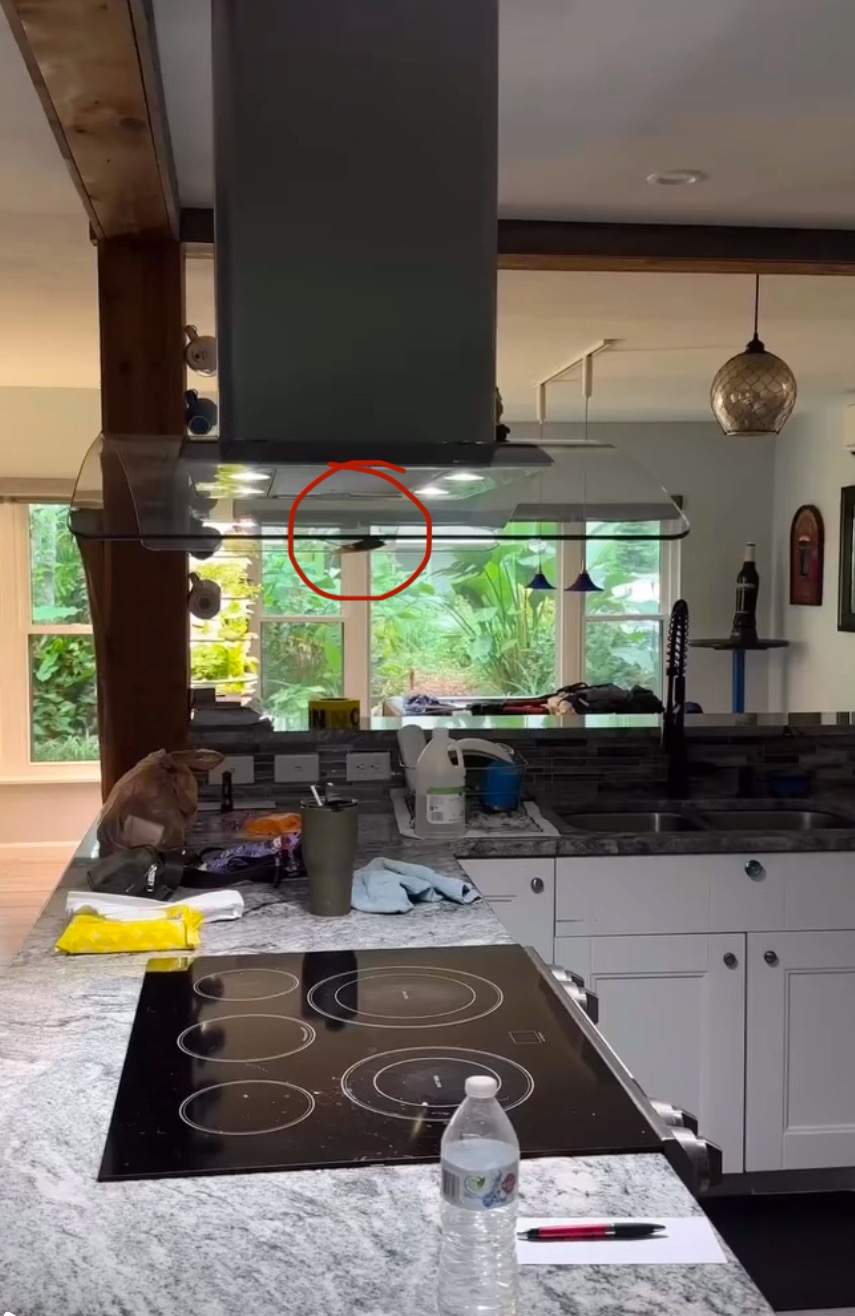
I saw a very large brown mystery bug in my kitchen, and it turned out to be a katydid! Specifically, a Brown Conehead Katydid.
Apparently, these are nocturnal creatures, so seeing one in the middle of the day, inside my house was out of the ordinary. I didn’t recognize it right away because it was brown, and the green ones are much more common.
Katydids: The Enigmatic Green and Brown Insects of the Night
Katydids, often mistaken for grasshoppers or crickets, are fascinating insects that belong to the family Tettigoniidae. Renowned for their camouflaging abilities (their wings look like leaves!) and melodic nighttime calls, these insects play vital roles in their ecosystems.
Found across the globe, katydids come in shades of green and brown, each color aiding them in blending seamlessly into their environments.
What Are Katydids?
Katydids are large, nocturnal insects with long, slender legs and antennae that often exceed the length of their bodies. They can range in size from less than an inch to several inches long, depending on the species. With over 6,000 species worldwide, they inhabit a variety of environments, including forests, grasslands, and gardens.
One of their most striking features is their ability to produce sound. Male katydids “sing” by rubbing their wings together in a process called stridulation, primarily to attract mates. Their calls are often rhythmic and repetitive, sounding like “katy-did, katy-didn’t,” which gives them their common name.
Florida is home to a diverse range of katydid species, thanks to its warm climate and lush vegetation. These insects are most active during the summer and early fall, filling the night air with their rhythmic calls.
Green katydids are commonly found in the state’s forests and gardens, blending into the abundant foliage. Brown katydids, on the other hand, are often spotted in drier regions or among the leaf litter on forest floors.
Green Katydids
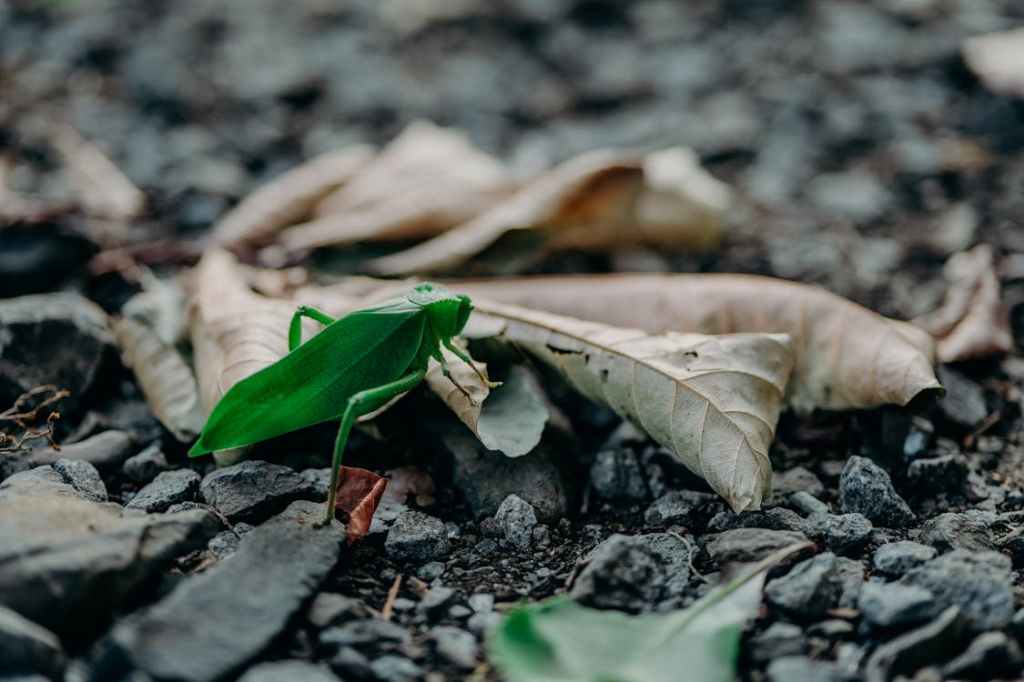
Green katydids are the most iconic and commonly encountered type. Their vibrant green coloration mimics fresh leaves, allowing them to remain hidden from predators such as birds and bats. I actually always just called them “Leaf Bugs” before learning their real name. This camouflage is a key survival strategy, especially since katydids are relatively slow movers.
Green katydids are often found in leafy trees and shrubs where they feed on foliage. Some species have wing patterns that resemble veined leaves so closely that even the tiniest details—like spots or discolorations—are mimicked. This remarkable adaptation not only hides them from predators but also makes them nearly indistinguishable from the plant life they inhabit.
Brown Katydids
Brown katydids are less common and particularly adapted to dry or arid regions where green foliage is less abundant. Their earthy tones resemble dried leaves, bark, or even soil, providing them with effective camouflage in environments like forests during fall or in areas with sparse vegetation.
Like their green counterparts, brown katydids use their coloration to avoid detection. Some species can even change color during their lifetimes, shifting from green to brown as they age or in response to environmental conditions. This color change can be triggered by hormonal shifts or molting cycles.
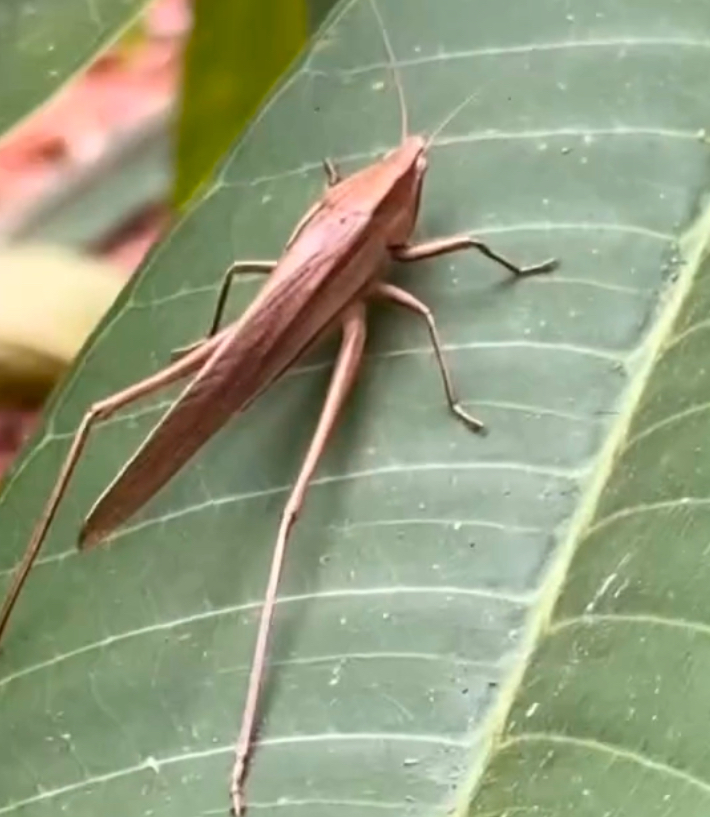
Brown Conehead Katydids
The brown conehead katydid (Neoconocephalus triops, shown above) is a striking species known for its elongated, conical head. And this is what I found in my kitchen!
Found primarily in the southeastern United States, including Florida, this katydid is a powerful flyer and is often attracted to lights at night. (or my kitchen light) Its brown coloration helps it blend into grassy habitats and dry vegetation.
Brown conehead katydids are omnivorous, feeding on a variety of plant material as well as small insects. Their loud, buzzing calls are distinctive and can be heard during warm evenings, making them a unique presence in their ecosystems.
Watch Me Catch the Katydid in My Kitchen
Life Cycle of Katydids
Katydids undergo incomplete metamorphosis, meaning their life cycle consists of three stages: egg, nymph, and adult. Females lay their eggs on leaves, bark, or soil, depending on the species. The eggs resemble tiny seeds and can remain dormant for months, hatching when conditions are favorable.
Nymphs resemble miniature adults but lack fully developed wings and reproductive organs. They molt several times as they grow, gradually developing their characteristic wing structures. Depending on the species, the process from egg to adult can take several weeks to months.
Diet and Role in the Ecosystem
Katydids are primarily herbivorous, feeding on leaves, flowers, and fruits. However, some species are omnivorous and will consume small insects or even carrion. This dietary flexibility allows them to thrive in a wide range of habitats.
In their ecosystems, katydids play essential roles. They act as both herbivores and prey. By feeding on plant matter, they help control vegetation growth and contribute to the nutrient cycle. In turn, they are a food source for many animals, including birds, bats, spiders, and small mammals.
Katydid Communication
The calls of katydids are not just for attracting mates; they also serve as a way to establish territory or warn rivals. Each species has its unique call pattern, which is produced by specialized structures on their wings. These calls are amplified by the surrounding environment, creating the enchanting nighttime symphony that katydids are famous for.
Interestingly, some predators, such as bats, can detect katydid calls using echolocation. To avoid becoming dinner, some katydids have evolved to sing in frequencies that are harder for bats to detect.
Katydids and Humans
Katydids have long intrigued humans with their mysterious calls and stunning appearances. In some cultures, they are considered symbols of nature’s beauty and resilience. They are often studied for their role in ecosystems and as indicators of environmental health.
However, katydids can sometimes become agricultural pests. Large populations may defoliate crops or ornamental plants. Despite this, they are rarely seen as a significant threat compared to other insects like locusts or caterpillars.
Protecting Katydids and Their Habitats
Habitat loss and pesticide use pose significant threats to katydid populations. As more natural landscapes are converted into urban areas or farmland, these insects lose the environments they rely on for survival. Pesticides not only kill katydids directly but also reduce the availability of their food sources.
Conservation efforts that focus on preserving natural habitats and promoting biodiversity can help protect katydid populations. Encouraging the use of organic gardening practices and creating insect-friendly spaces in urban areas can also make a difference.
Katydid or Didn’t
Katydids, both green and brown, are remarkable insects that showcase nature’s ingenuity. Their adaptations for survival, enchanting calls, and ecological importance make them a vital part of our natural world.
Whether you encounter one blending into a leaf, surprising you in your kitchen or hear their melodic chorus on a warm summer night, katydids remind us of the beauty and complexity of the ecosystems around us.
Discover more from Keane & Coastal
Subscribe to get the latest posts sent to your email.
 Keane & Coastal
One thought on “The Day I Found a Katydid in My Kitchen”