

Hydroponic gardening offers countless benefits, but one common challenge is getting rid of fungus gnats that are attracted to the wet environment.
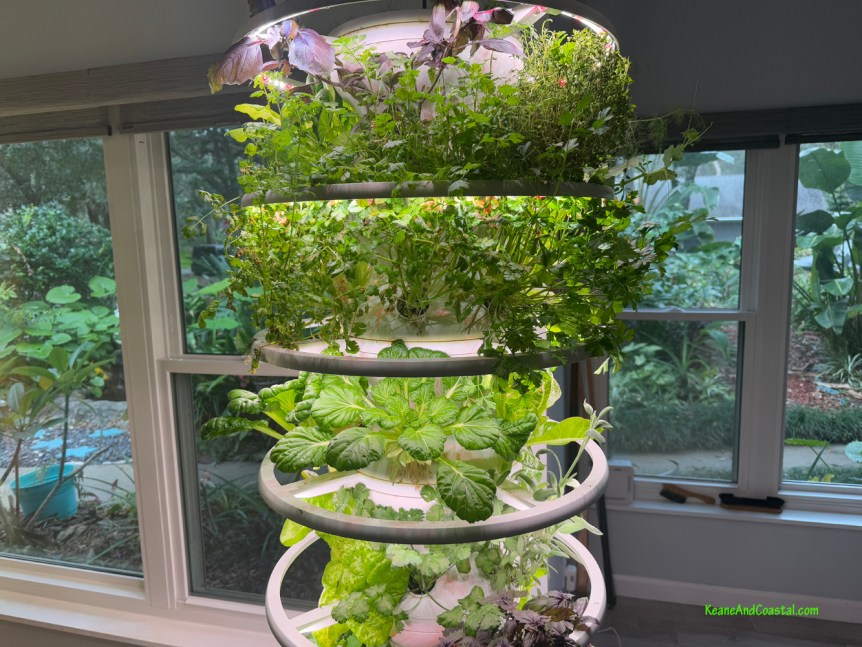
I’ve been battling them since moving my Lettuce Grow farmstand and Gardyn indoors and have had some success getting rid of hydroponic garden gnats using the methods in this post. Read on to find out what worked the best!
What Are These Gnats Near My Plants?
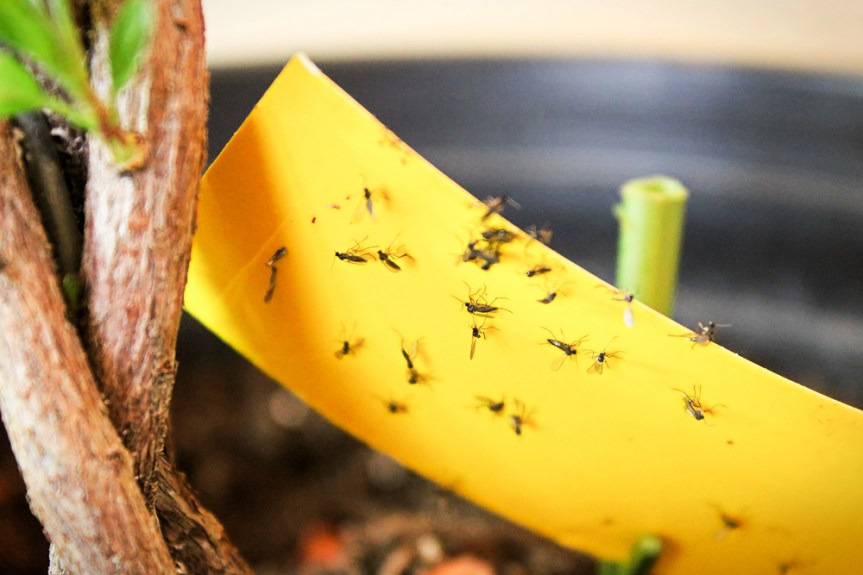
If you are seeing little black flying bugs hovering around your plants, they are most likely fungus gnats.
Fungus gnats are small, dark-colored flies that are often mistaken for fruit flies. These tiny, winged pests may seem harmless at first, but they can disrupt your plants’ growth by targeting their roots and creating an unhealthy growing environment.
The adults are more of a nuisance than a direct threat to plants, but their larvae can cause significant damage. These larvae live in the moist growing media or water of your hydroponic system, feeding on organic matter and plant roots.
Signs of a gnat infestation include:
- Small flies hovering around your plants or lights.
- Stunted plant growth due to root damage.
- Wilting or yellowing leaves despite proper care.
Why Gnats Love Hydroponic Gardens
Gnats are attracted to the damp conditions and organic matter in hydroponic setups. Systems that use media like coco coir, peat moss, or other moisture-retaining substrates provide an ideal breeding ground for these pests.
Additionally, overwatering or excess organic material in the system can exacerbate the problem by creating the perfect environment for gnat larvae. Which is why watering less is my first recommendation for battling gnats!
How to Get Rid of Hydroponic Garden Gnats
I would like to say I’ve totally gotten rid of my hydroponic garden’s gnats, but they are still around. However, I’ve found good ways to keep them at a minimum.
Water Less Often
One of the most effective ways to combat gnats is by making your hydroponic garden less appealing to them. Fungus gnats thrive in moist environments, so reducing moisture can disrupt their life cycle.
I initially followed the watering schedule recommended by Lettuce Grow and found that to make everything too wet. I cut down on watering and let things dry out a little bit between waterings and that cut down on the amount of gnats.
Remove Debris and Dead Leaves
I make a point to regularly remove the dead and decaying plants leaves on the underside of the plants. This minimizes food sources for larvae.
Trap the Adult Gnats
While adult gnats don’t directly harm plants, controlling their population is vital to breaking the infestation cycle.
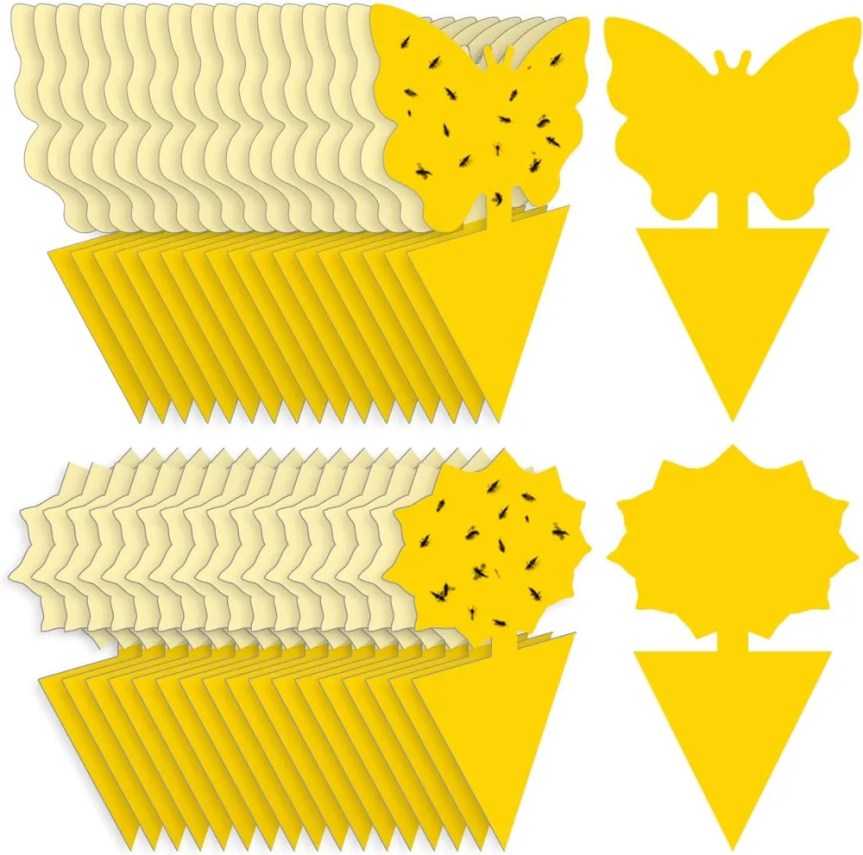
For an easy way to trap gnats, you can put gnat stickers all around the garden. The yellow color attracts the gnats and they stick to the stickers. You can get them very cheap in bulk on Amazon! Click here to get gnat stickers for under $6.
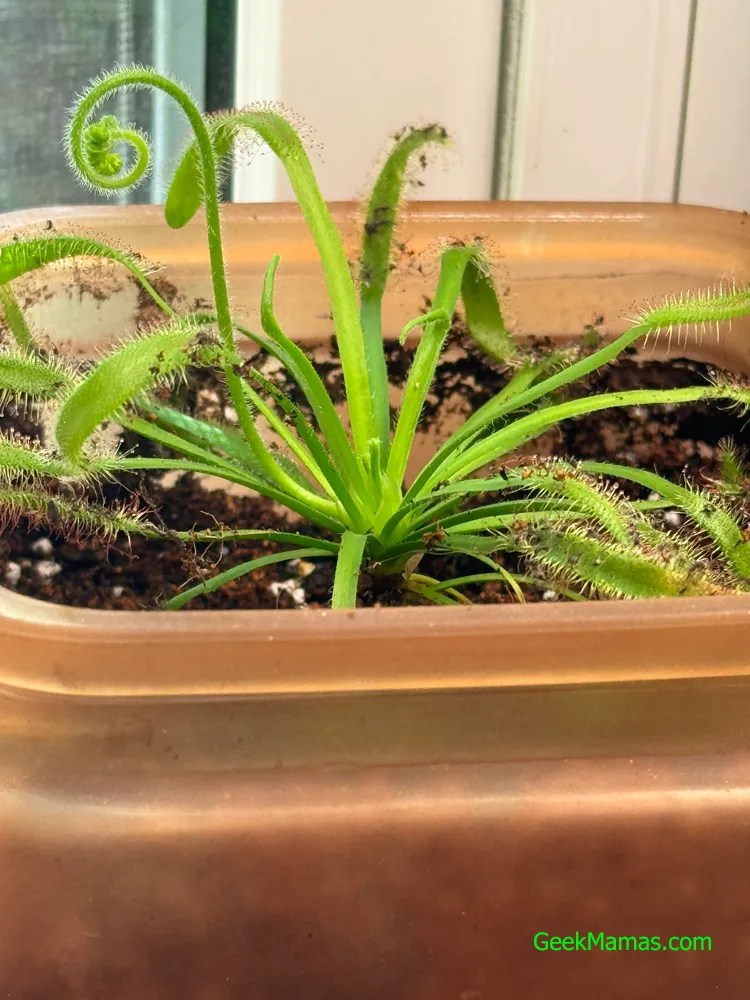
The gnat stickers are pretty effective, but my favorite way to control them is with carnivorous plants! I have a sundew and recently added a nepenthes.
These plants do a great job of catching the gnats, and it’s pretty neat to see how the gnats actually feed them and keep them alive.
My sundew is so well fed that it has flowered and produced seeds several times already. I got my sundews on Amazon and they arrived in decent condition. Click here for the Sundew plants on Amazon
I just sit the plants next to my hydroponic towers and let them go to work!
Target the Larvae
The larvae are the real threat to your plants, so if your plants start looking bad and they are heavily affected, you’ll need to take further action.
Here’s how to address the larvae directly:
- Biological Controls: Introduce beneficial nematodes or predatory insects like Hypoaspis miles (predatory mites) to your system. These natural enemies feed on gnat larvae without harming your plants.
- Bacillus thuringiensis israelensis (BTI): This biological insecticide specifically targets gnat larvae. Add it to your water reservoir or growing media to eliminate larvae effectively.
- Hydrogen Peroxide Solution: Mix a solution of one part hydrogen peroxide to four parts water and apply it to your growing media. This kills larvae on contact without harming your plants.
Prevent Future Gnat Infestations
Once you’ve rid your hydroponic system of gnats, take steps to keep them from coming back. I actually haven’t gone so far as to go after the larvae yet, because the gnats aren’t that bad, and they feed my other plants.
But if you did manage to completely get rid of your hydroponic garden gnats, here’s how to keep them from coming back:
- Use Gnat-Resistant Media: Switch to inert media like clay pebbles or perlite, which don’t retain as much moisture or organic matter.
- Monitor Watering: Avoid overwatering and maintain proper moisture levels to prevent creating a hospitable environment for gnats.
- Regular Maintenance: Keep your hydroponic system clean and free of debris. Routinely inspect for signs of pests.
- Ventilation: Improve airflow around your plants using fans. Gnats prefer stagnant air, so increasing circulation can discourage their presence.
Fungus gnats can be frustrating, but with the right approach, they’re entirely manageable. By combining preventive measures, traps, and biological controls, you can reclaim your hydroponic garden from these persistent pests.
A little effort now can save your plants and help ensure your garden continues to thrive. Don’t let gnats derail your hydroponic success and take over the garden!
Discover more from Keane & Coastal
Subscribe to get the latest posts sent to your email.
 Keane & Coastal
2 thoughts on “Getting Rid of Hydroponic Garden Gnats”