

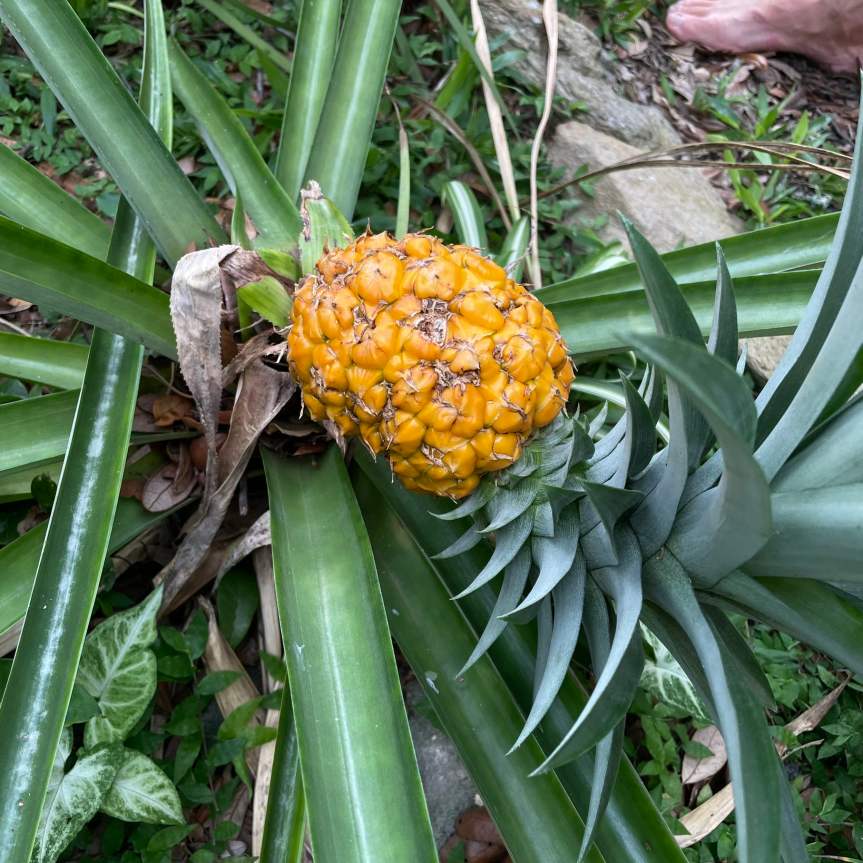
Growing pineapples in Florida is as easy as sticking the top of your eaten pineapple in the ground! We have about ten pineapple plants all around our yard and have had several produce pineapples in the last few years.
Florida’s tropical and subtropical climate makes it an ideal environment for growing pineapples. These sun-loving plants thrive in conditions that mimic their native habitat in Central and South America, where warmth, humidity, and plenty of sunlight abound.
Here is the latest one of our homegrown pineapples. They’ve all been on the small side and look a bit funny, but they taste great:
How to Prepare Your Pineapple for Replanting
Start with a fresh, healthy pineapple. Look for a fruit with a vibrant green crown (the leafy top) that shows no signs of wilting, browning, or damage. Avoid pineapples with dry, yellowing, or mushy leaves, as these crowns are less likely to grow successfully.
People always say you will have better luck with organic pineapples or those from a farmer’s market, but all of mine have come from the grocery store and every single one has grown. So don’t worry too much about where it comes from, go ahead and give it a try with whatever pineapple you can find.
Step 1: Remove the Pineapple Crown
To prepare the pineapple for planting, cut off the leafy crown from the top of the fruit. Twisting also works—simply grip the crown firmly and twist until it detaches. If cutting, make a clean slice just below the base of the leaves, removing all fruit flesh to prevent rot during the planting process.
Step 2: Strip Lower Leaves and Expose the Stem
Once the crown is removed, carefully peel away the lower leaves to expose about an inch of the stem. This bare section will be the rooting area when planted. As you remove leaves, you may notice small root nubs on the exposed stem—these are a great sign that your pineapple crown is ready to root.
If you already have full roots, you can just plant it right in the dirt. But if you want to develop the roots a bit, the next step is putting it in water.
I made a Reel showing how I remove the leaves and put it in water:
Step 3: Let It Dry (maybe)
Most instructions will tell you to let it dry out a couple days before planting. If you want to do that, then place it in a cool, dry location out of direct sunlight. This drying process helps seal the cut end of the stem, reducing the risk of rot when planted.
But honestly, I have never done that! I just cut it and put it right into the water cup or ground.
Step 4: Root the Pineapple Crown
To encourage root growth, you can either place the crown in water or plant it directly into soil.
- In Water: Fill a glass with water and suspend the crown so only the base touches the water. Use toothpicks to keep the crown in place. Change the water every few days to keep it fresh, and within a week or two, roots should begin to form.
- In Soil: Alternatively, plant the dried crown in a pot filled with well-draining soil. Bury the exposed stem about an inch deep, ensuring the leaves remain above the soil. Water lightly to keep the soil moist but not soggy.
Caring for Your Pineapple Plant
Whether rooting in water or soil, place your pineapple in a warm, sunny spot. I usually sit them in the kitchen where they get indirect light, so they don’t need a lot of sun while rooting.
If you’ve started in water, transfer the crown to a pot with soil once roots are a few inches long. Pineapples thrive in bright light, so a south-facing window or outdoor location with plenty of sun is ideal.
Water the plant sparingly—pineapples are drought-tolerant and prefer slightly dry soil. Overwatering can lead to root rot, so let the soil dry out between waterings.
Be Patient Growing Your Pineapple
Pineapples grow slowly, so patience is key. It can take two or three years for your plant to produce fruit. However, the wait is worth it when you see your first pineapple growing at the center of the plant.
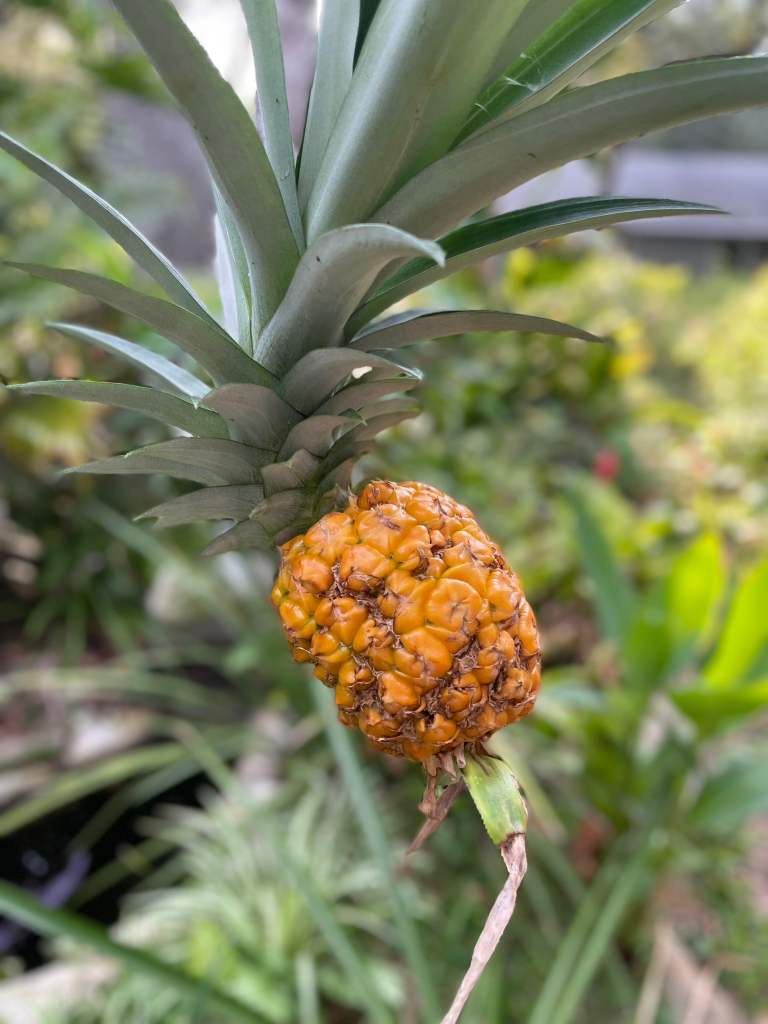
The start out green and look like cute baby pineapples! It’s really neat to watch them grow. Once they reach a certain size, they will slowly turn yellow. Once it’s all yellow, it’s time to pick and eat it!
Our homegrown pineapple, shown below, was small but delicious!

One more bonus tip- clear the old leaves of your plant after you pick the pineapple, but make sure you save the plant. It will make a new pineapple from a new section! It’s amazing the way one plant will keep producing.
The pineapple (Ananas comosus) is a tropical plant that belongs to the bromeliad family (Bromeliaceae), a diverse group of plants known for their striking foliage and unique growth habits. Unlike many other fruit-bearing plants, the pineapple exhibits distinct characteristics that make it stand out botanically.
A Little More About the Pineapple Plant
1. A Perennial Herbaceous Plant
The pineapple is a perennial, which means it can live and produce fruit for multiple years. It grows low to the ground, typically reaching a height of 3 to 5 feet, and has a rosette of long, spiky leaves that emerge from a central stem.
2. Bromeliad Family Characteristics
As a member of the bromeliad family, the pineapple shares traits with other bromeliads, such as a tolerance for dry conditions and a preference for well-drained soil. It is one of the few bromeliads cultivated for its edible fruit, as most bromeliads are primarily grown as ornamental plants.
We have at least seven other types of bromeliads in our yard, and they are amazingly resilient. Bromeliads will survive even if you pick them and forget to plant them for a bit! (I know from experience)
3. A Tropical Plant
Native to South America, particularly the region encompassing modern-day Brazil, Paraguay, and northern Argentina, the pineapple thrives in tropical and subtropical climates. It requires warm temperatures, abundant sunlight, and moderate humidity to grow successfully, which is why they grow so great in Florida.
4. A Unique Flowering Plant
The pineapple is a monocotyledonous plant, meaning it has one embryonic seed leaf (cotyledon). It produces flowers on a single spike, with each flower developing into a small fruit. These individual fruits fuse together to form the pineapple we recognize, making it a multiple fruit or composite fruit.
5. CAM Photosynthesis
Pineapple plants use a specialized process called Crassulacean Acid Metabolism (CAM) photosynthesis, which allows them to conserve water. This adaptation makes them well-suited to arid environments, as they open their stomata at night to minimize water loss while still absorbing carbon dioxide.
6. Fruit-Bearing Characteristics
After a pineapple plant flowers and produces fruit, it does not bear another fruit from the same rosette. However, it can produce offsets, or “pups,” around the base of the plant, which can be used to grow new pineapple plants. Bananas are another plant that also do a similar thing with “pups.”
If you have any questions about growing your own pineapple, be sure to leave me a comment!
Discover more from Keane & Coastal
Subscribe to get the latest posts sent to your email.
 Keane & Coastal
One thought on “Growing Pineapples in Florida”