

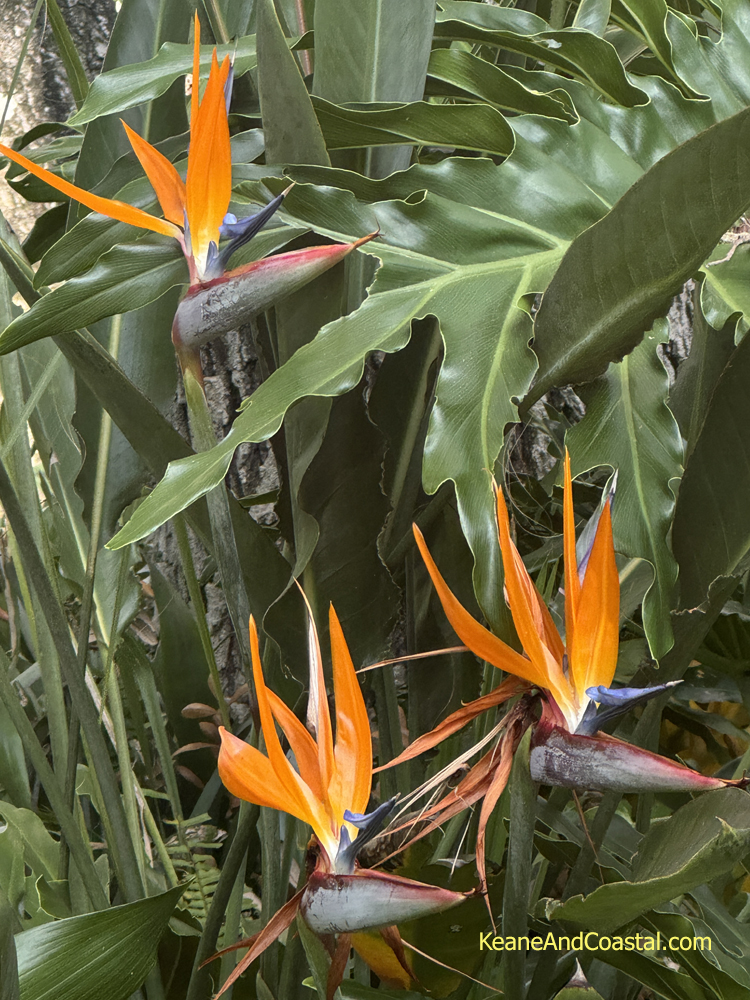
Bird of paradise plants (Strelitzia reginae) are popular all over Florida and we’ve always had them in our yard. I noticed some of them rarely bloom, while others pop up and surprise me. I learned there are certain conditions you can set to make sure your Bird of Paradise plant blooms regularly.
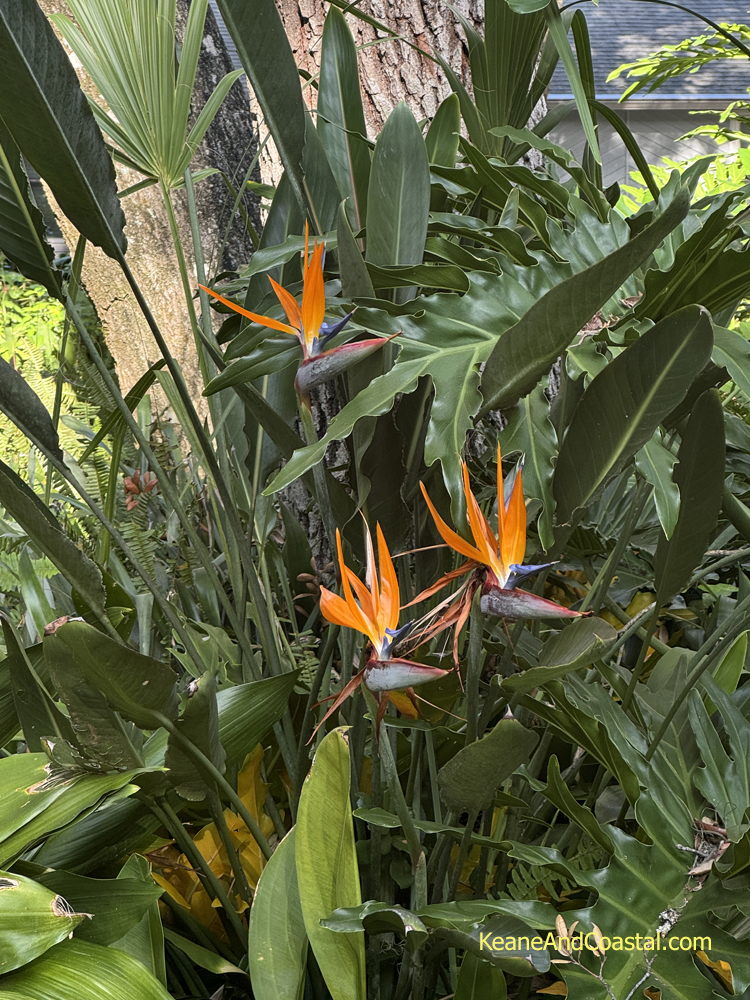
This particular one below wasn’t doing much until I moved it to a spot with full sun part of the day, and a little afternoon shade.
Keep Your Bird of Paradise Blooming
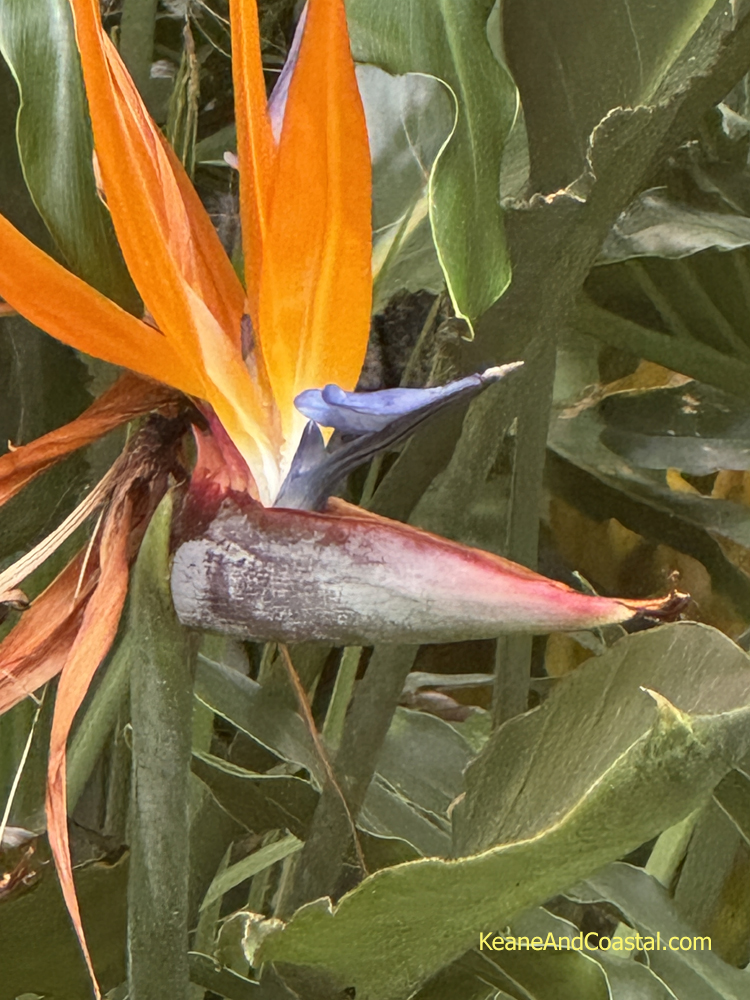
Bird of Paradise plants bloom when provided with the right conditions, which mimic their native tropical and subtropical climates. They get their name from their unique flowers that resemble bird heads popping up through the foliage.
Here’s what helps them bloom:
Mature Age: These plants need to reach maturity, which usually takes 3–5 years, before they start blooming. Young plants might grow beautiful leaves but won’t produce flowers until they’re older. This explains why some of our plants don’t seem to be doing anything!
Adequate Sunlight: Bird of paradise plants require bright, indirect sunlight for blooming. Indoor plants benefit from a spot near a south-facing window, while outdoor plants thrive in partial to full sunlight. Too much shade can hinder blooming. They also seem to stay smaller when put in direct sunlight.
Proper Watering: Keep the soil moist but avoid overwatering, as bird of paradise plants are prone to root rot. Allow the top inch of soil to dry out between waterings, especially in cooler months when growth slows down.
Humidity and Temperature: Warm temperatures (above 65°F during the day) and high humidity are essential. Cold temperatures can stunt flowering, so outdoor plants should be protected in cooler climates.
Balanced Fertilizer: A slow-release, balanced fertilizer applied in spring and summer boosts nutrient availability. However, excessive fertilizer, especially high nitrogen, may encourage leaf growth over blooms. (I have never actually added fertilizer to ours, but of course it helps.)
Root Bound Conditions: When slightly root-bound, bird of paradise plants often produce more flowers. Repotting every 2–3 years, or only when roots are noticeably constrained, can help trigger blooming. So they may actually take longer to bloom if plants outside in the yard.
Pruning Dead Leaves: Removing dead or damaged leaves redirects the plant’s energy toward flowering.
How Often Do Birds of Paradise Bloom?
Under ideal conditions Birds of Paradise can bloom once or twice a year. Here’s a bit more detail on their blooming cycle:
- Bloom Season: Bird of paradise plants usually bloom in late winter through early spring. In warm, tropical climates, or under consistently ideal indoor conditions, they may bloom again in late summer to early fall.
- Bloom Frequency: Mature plants in perfect conditions (adequate sunlight, warmth, humidity, and care) might produce flowers twice a year. However, if conditions are less than ideal, they might bloom just once a year or even less frequently.
- Flower Duration: Each bloom can last several weeks, giving you a good period to enjoy the vibrant flowers.
To encourage frequent blooming, keep the plant in bright indirect sunlight, maintain slightly root-bound conditions, and ensure stable warmth and humidity. Or plant them in the yard in a good spot like I did, and hope for the best!
Discover more from Keane & Coastal
Subscribe to get the latest posts sent to your email.
 Keane & Coastal
2 thoughts on “How to Make Sure Your Bird of Paradise Blooms”