


After trying a fresh banana off the banana trees in our Florida yard, I wondered why it looked and tasted different than the grocery store bananas. It had seeds!
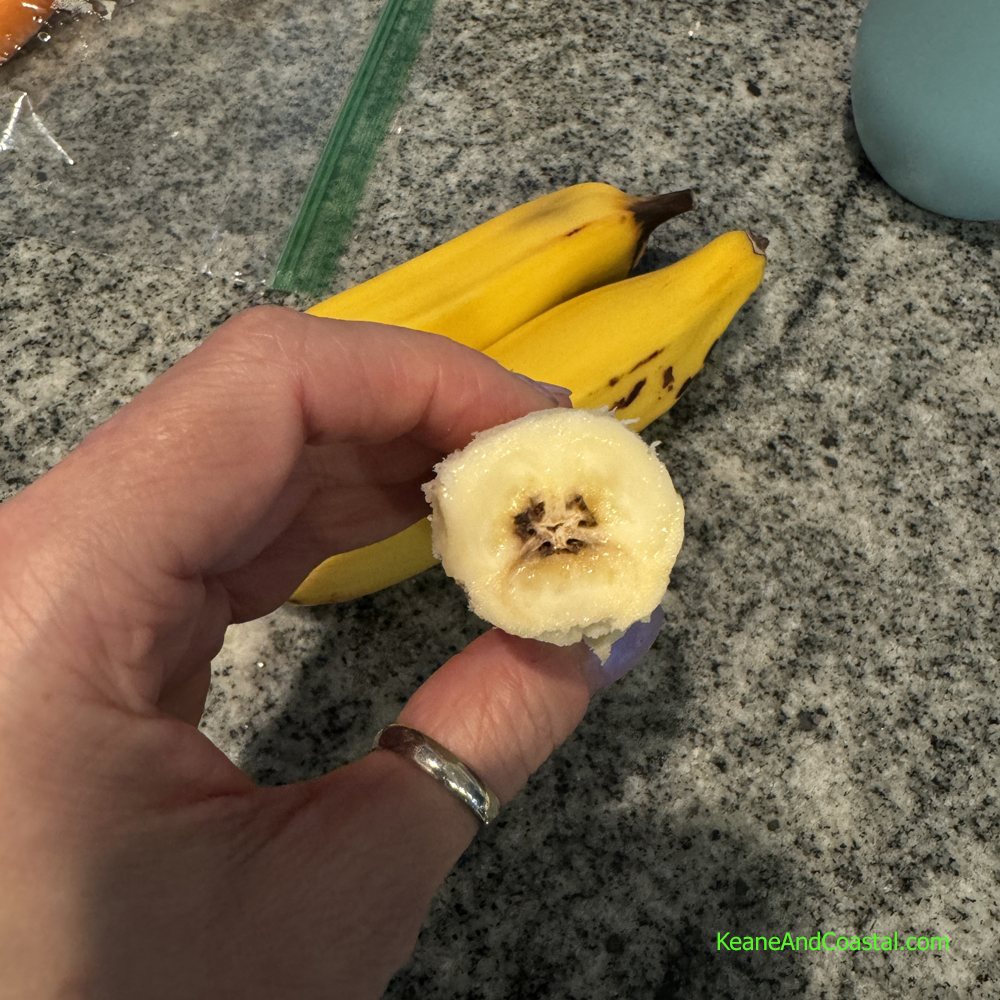
And instead of being long, slender, and rounded, it was short and chunky, almost squared off hard edges. And when it ripened to yellow, they all had black spots.
After much research trying to figure out what kind of bananas I had, I narrowed it down to Burro (also called Orinoco) bananas.
How to Tell If You Have Burro Bananas
Burro bananas, also known as “chunky bananas” or “Orinoco bananas,” are a variety of bananas with a distinctive appearance and unique flavor profile. They are shorter and stubbier than the common Cavendish bananas, with squared edges and a slightly thicker peel.
They are native to Mexico and Central America and are known for their squat, blocky shape with distinct edges. They have green skins that ripen to a deep yellow with black spots when fully mature. Inside, the flesh is white and firm when green and then gets creamier as it ripens.
The Internet keeps claiming it has a “tart or lemony” flavor, but to me it just tastes like a very mildly flavored banana. Not really sweet or “banana-y.” And it tastes a bit starchy on the less ripe bananas.
Another main difference is a noticeable core and seeds down the center. This is what initially tipped me off that this wasn’t just a small banana, but an entirely different variety.

Are Burro Bananas Healthier than Other Bananas?
One interesting bit of information I found while looking up the Burro banana is that they are considered even healthier than the common varieties (like the Cavendish) usually found at the grocery store.
While burro bananas and Cavendish bananas are both highly nutritious, burro bananas offer a few specific advantages, particularly in fiber, resistant starch, and lower sugar content. Ultimately, the “healthier” choice depends on individual dietary needs, but burro bananas may be the better option for digestion, blood sugar management, and antioxidant intake.
So, while both varieties have overlapping health benefits, here’s how burro bananas stand out and differ in terms of nutrition:
1. Higher Fiber Content
Burro bananas typically contain more fiber than Cavendish bananas. This makes them better for digestive health, promoting regularity, and helping with cholesterol control. The extra fiber can also help you feel fuller longer, making them beneficial for weight management.
2. Unique Antioxidants
Burro bananas have a slightly different antioxidant profile, which includes higher levels of certain flavonoids and carotenoids. These antioxidants help reduce inflammation and oxidative stress, lowering the risk of chronic diseases like heart disease and certain cancers.
3. Resistant Starch
Unripe burro bananas contain more resistant starch than Cavendish bananas. Resistant starch acts as a prebiotic, feeding beneficial gut bacteria and helping regulate blood sugar levels. This may make burro bananas better for individuals managing diabetes or insulin resistance.
4. Lower Sugar
Burro bananas have a slightly lower sugar content than Cavendish bananas, especially when they are still green or partially ripe. This can make them a better option for people looking to control their sugar intake, while still enjoying the nutritional benefits of bananas.
5. Higher Potassium Levels
While both burro and Cavendish bananas are high in potassium, burro bananas often contain slightly higher amounts. Potassium is key for heart health, muscle function, and maintaining fluid balance in the body. This makes burro bananas a better choice for those looking to increase their potassium intake.
6. Different Flavor and Texture
Burro bananas have a more tart, lemony flavor and firmer texture, which can make them more versatile in cooking. Their ability to be used in savory dishes, as well as sweet, adds nutritional diversity since they can be eaten at various stages of ripeness without too much sugar.
7. More Resistant to Disease
From a sustainability perspective, burro bananas are generally more resistant to diseases compared to Cavendish bananas, which are vulnerable to certain blights. This makes burro bananas a more sustainable choice for those concerned about the long-term availability of bananas.

So, if you have a banana tree in your yard and notice it is making funny little blocky bananas, you may have yourself a Burro banana tree!
They make a ton of bananas on one stalk, so I’ve been chopping them up as they ripen, and freezing the slices to use in smoothies. The flavor is very mild, so you need to add something else to it to make it sweeter. I made one with blueberries, acai and honey and it was delicious!
Discover more from Keane & Coastal
Subscribe to get the latest posts sent to your email.
 Keane & Coastal
2 thoughts on “What Are These Small Bananas on My Florida Banana Tree?”