


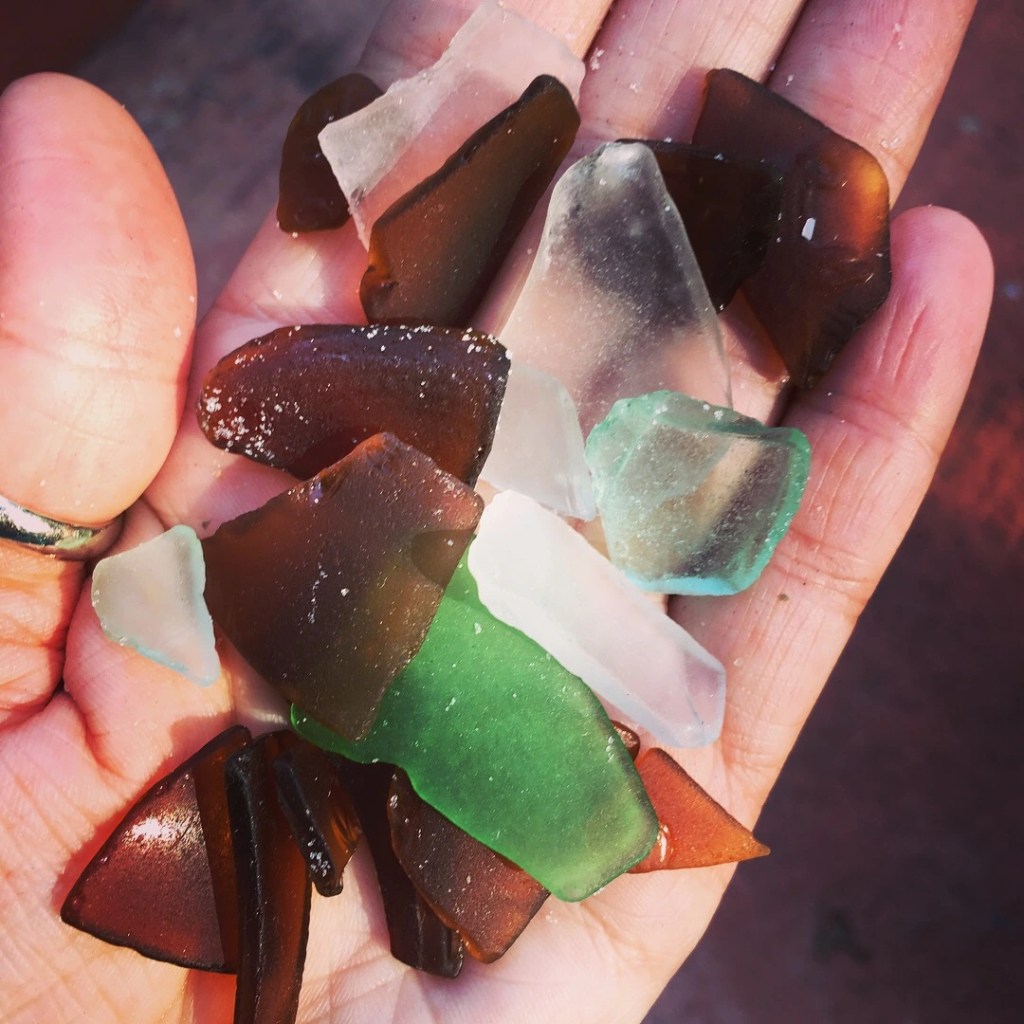
I had never found sea glass until we moved to Atlantic Beach, FL, but now it is a favorite part of our evening beach stroll. Sometimes we just find a piece or two, and sometimes we get a whole pocketful, but we almost never come home empty-handed.
Sea glass, also known as beach glass, is created through a natural process of tumbling and weathering. Each piece of sea glass starts its journey as discarded glass bottles, jars, and other objects that find their way into the ocean. Over time, the relentless motion of waves and the abrasive action of sand smooth and shape the glass, transforming it into beautifully frosted gems of various colors and sizes.
The allure of sea glass lies not only in its aesthetic appeal but also in the stories it holds. Each piece of sea glass carries with it a history—a tale of its origins, its journey through the ocean, and the forces of nature that shaped it into its current form. Some pieces may have been part of shipwrecks or maritime accidents, while others may have been tossed into the sea by careless beachgoers decades ago.
Even though I’m sure many of the pieces we find are old beer bottles, it’s still fun when you get a piece with some unique detail on it and try and figure out where it came from.

Where to Look for Sea Glass
While some beaches are renowned for their abundance of sea glass, such as Glass Beach in California or Seaham Beach in England, not every beach will have glass.
I grew up in Sarasota, FL and never once saw a piece of sea glass! And I’ve gone to different beaches in Jacksonville and Ponte Vedra and not always found glass. So, it’s one thing that makes Atlantic Beach special. I can almost always come home with glass jingling in my pocket.
The best place to find sea glass is right along the shoreline, during low tide. The ocean is drawing back the waves and exposing the hidden treasures under the sea, and along with it will be the tumbled glass.
You can also find pieces higher up on the shore, if you follow the patches and lines of shells left by the receding tide.
One tip- if you find one piece, look for more above and below that spot. Glass starts as one big chuck and breaks down over time. Often, you’ll find several pieces in the same spot of the same broken-down item.
Colors of Sea Glass
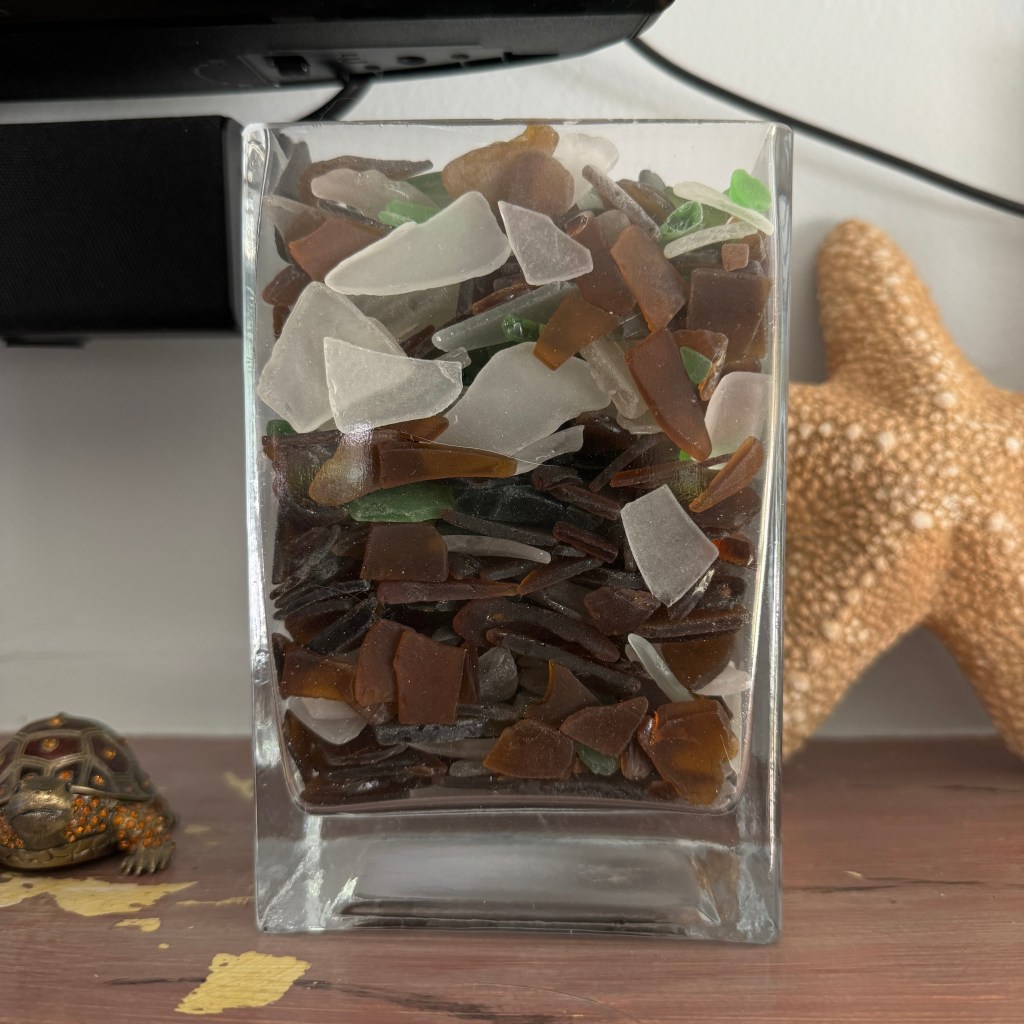
Sea glass comes in a variety of colors, each with its own unique origin and characteristics. The colors we most often find in Atlantic Beach are brown and white, with green a distant third. We always get excited when we find a blue or aqua piece because it is a rare find.
The color of sea glass is primarily determined by the type of glass it originated from, as well as the length of time it has been tumbling in the ocean and the environmental conditions it has been exposed to.
Common colors of sea glass and their potential origins:
Clear/White: Clear or white sea glass is typically derived from clear glass bottles, jars, or windows. It is one of the most common colors of sea glass and can be found on beaches around the world.
Brown/Amber: Brown or amber sea glass comes from bottles used for beverages such as beer, whiskey, or medicine. It is relatively common and can be found on beaches with a history of industrial or residential activity.
Green: Green sea glass is often sourced from soda bottles, Heineken bottle, wine bottles, or other containers tinted with iron oxide or copper compounds. It is a popular color among collectors and can be found on beaches with a history of glass manufacturing or recreational activity.
Blue: Blue sea glass is prized for its rarity and beauty. It usually originates from bottles used for beverages like beer, wine, or mineral water, which were often tinted with cobalt oxide or manganese compounds. Blue sea glass is less common than other colors and is typically found on beaches with a history of maritime activity or near old dumpsites.
Seafoam/Light Blue: Seafoam or light blue sea glass is similar in origin to blue sea glass but is lighter in color and often more translucent. It comes from bottles and jars tinted with cobalt oxide or manganese compounds and is found on beaches with a history of glass manufacturing or recreational activity.
Lavender/Purple: Lavender or purple sea glass is rare and highly sought after by collectors. It comes from bottles and containers tinted with manganese dioxide or selenium compounds. Purple sea glass is relatively uncommon and is typically found on beaches with a history of glass manufacturing or near old dumpsites. (I haven’t found purple yet!)
Red/Orange: Red or orange sea glass is extremely rare and prized for its vibrant color. It usually originates from bottles used for beverages like wine, beer, or soda, which were tinted with selenium or copper compounds. Red sea glass is exceptionally rare and like purple glass is typically found on beaches with a history of glass manufacturing or near old dumpsites.
The most abundant colors of sea glass tend to be clear/white, brown/amber, and green, as these were the most commonly used colors for glass containers historically.
The rarest colors of sea glass are red/orange and lavender/purple, as these colors were less commonly used in glass manufacturing and are therefore harder to find.
What to Do with Sea Glass
For many, the allure of sea glass extends beyond collecting to include creative expression and artistic endeavors. Crafters and artisans incorporate sea glass into a wide range of handmade jewelry, home decor, and art pieces, showcasing its natural beauty in innovative and captivating ways.
From delicate earrings and pendants to intricate mosaics and sculptures, sea glass inspires creativity and imagination in those who seek to harness its enchanting qualities.
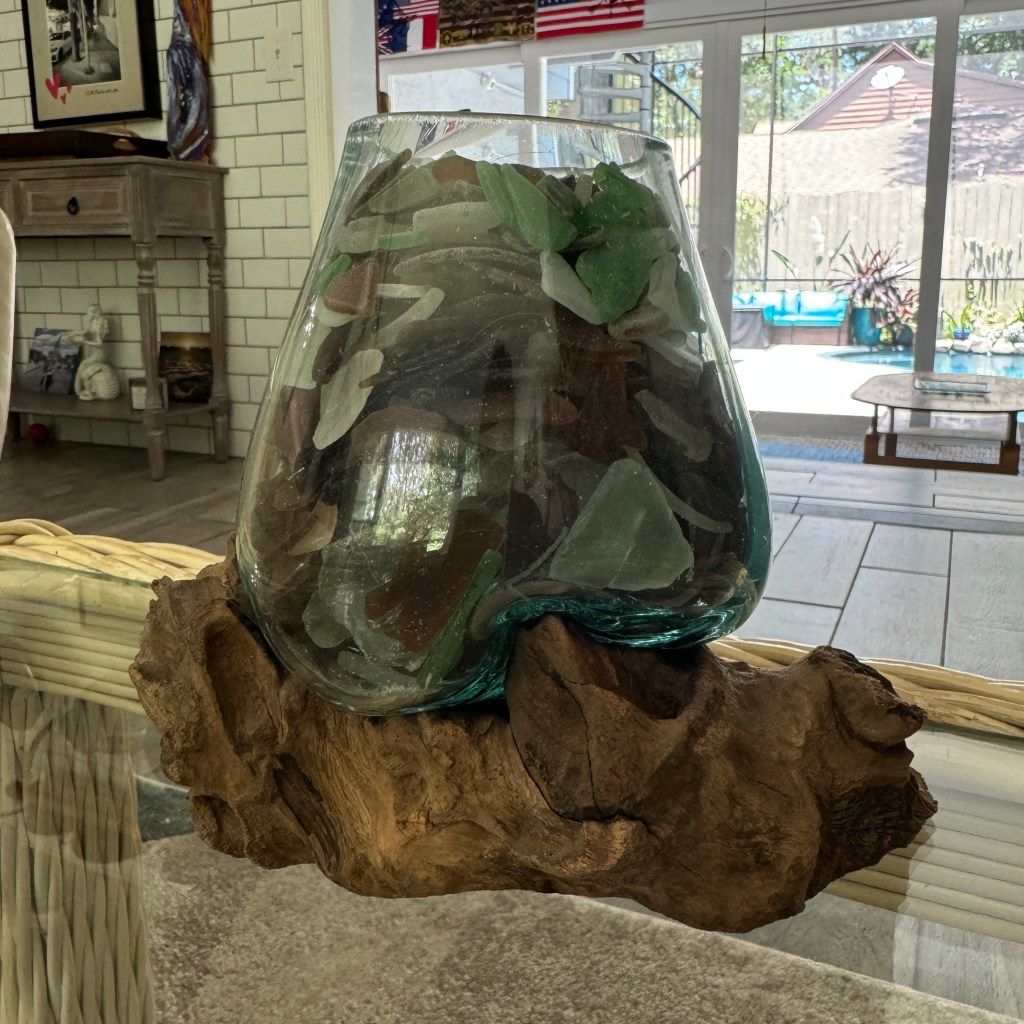
We save our glass in pretty vases and bowls and use the for beachy decor around the house. It’s a nice way to show off our collection.

Sea glass is much more than just a pretty beach find—it’s a symbol of the enduring power of nature, a repository of stories and history, and a source of inspiration and creativity.
Whether you’re a seasoned collector, a beachcomber in search of adventure, or simply someone who appreciates the beauty of the natural world, the world of sea glass offers endless opportunities for discovery and wonder.
So, the next time you find yourself walking along the shore, keep an eye out for these hidden gems of the sea—you never know what treasures you might uncover.
Discover more from Keane & Coastal
Subscribe to get the latest posts sent to your email.
 Keane & Coastal
3 thoughts on “The Hidden Gems of the Sea: Exploring the World of Sea Glass”