

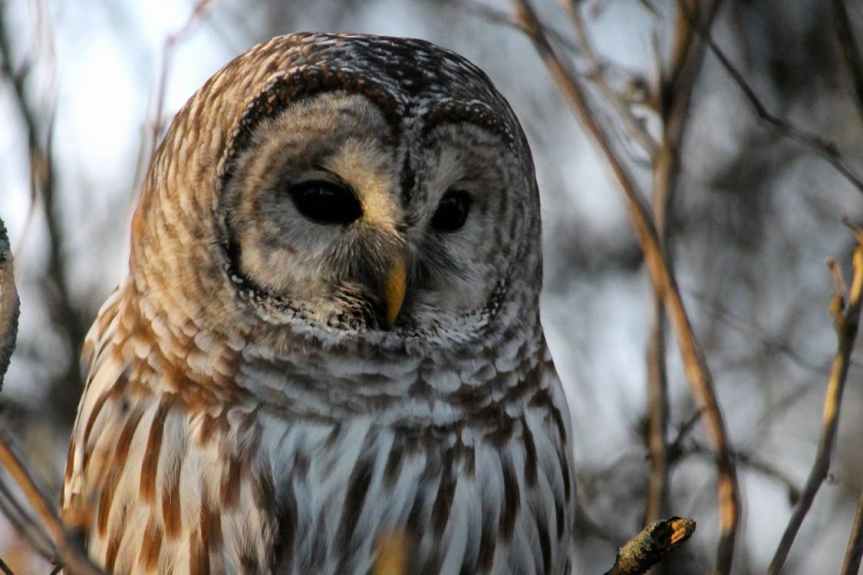
I had never seen Barred Owls in my yard until moving to Atlantic Beach, FL, where our neighborhood has a beautiful, lush canopy of large Live Oak trees. In the evenings we can hear them hooting and making some rather strange noises to communicate with each other.
Characteristics of the Barred Owl
The Barred Owl (Strix varia), also referred to as the northern barred owl or striped owl, is a large North American owl species. It is also known as the hoot owl or eight-hooter owl.
Florida Barred Owls have a wingspan of about 3-4 feet and a height of 16-25 inches. Their striking appearance includes dark brown eyes, a pale face with a dark rim, and horizontal barring on their chest, giving them their name.
These owls are known for their unique and haunting hoots, which they use for communication and territorial purposes.
Owl Habitat
Barred Owls are adaptable and can be found in various habitats, including forests, swamps, wooded parks, and suburban areas like our very own neighborhood.
In Florida, they thrive in both upland pine forests and wetlands, making them a versatile species well-suited to the state’s diverse landscape.
Behavior of the Barred Owls
Barred Owls are primarily nocturnal hunters, preying on small mammals like mice, rats, squirrels, and rabbits. They use their keen senses of hearing and sight to locate prey in the darkness. During the day, they roost in dense foliage or tree cavities, camouflaging themselves with their plumage to avoid detection.
It’s very hard to spot them when they are up in the trees, but we usually follow the sounds of their hooting until we see them. And sometimes they get very close, perching on lamp posts or bathing in our fountain.
A Barred Owl in Our Fountain:
Conservation Status
While Barred Owls are not currently listed as endangered or threatened, they face challenges due to habitat loss and fragmentation. Conservation efforts focus on preserving their natural habitats, protecting nesting sites, and raising awareness about the importance of these birds in maintaining ecological balance.
Interesting Barred Owl Facts
- The barred owl was first described by Philadelphia naturalist Benjamin Smith Barton in 1799.
- Adaptability: Florida barred owls are highly adaptable and can adjust to human-altered landscapes, making them a common sight even in suburban areas.
- Parenting: They are devoted parents, with both the male and female participating in raising their young, known as owlets.
- Predator Control: Barred owls play a crucial role in controlling rodent populations, making them valuable allies for farmers and land managers.
- On the Move: They are native to eastern North America but have expanded their range to the west coast of North America where they are considered invasive to the spotted owl species.
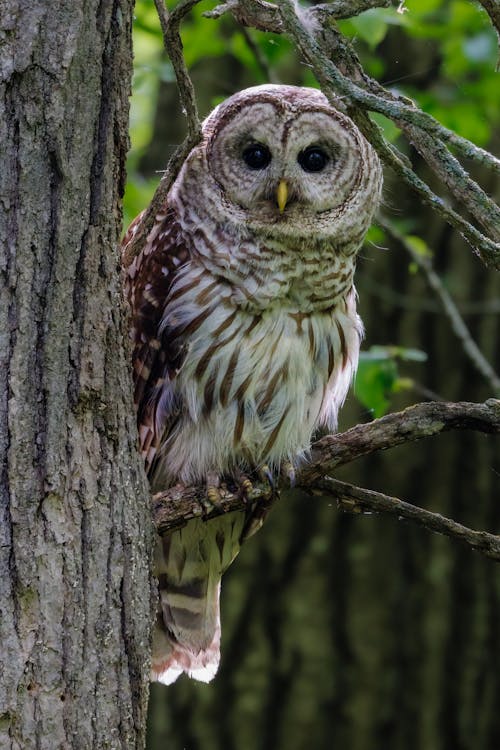
Florida barred owls are not just symbols of wilderness; they are integral to the delicate balance of nature. By understanding and appreciating these magnificent birds, we can contribute to their conservation and ensure that future generations can also experience the wonder of encountering a barred owl in the wilds (or neighborhoods) of Florida.
Discover more from Keane & Coastal
Subscribe to get the latest posts sent to your email.
 Keane & Coastal
2 thoughts on “Barred Owls in Our Florida Neighborhood”