

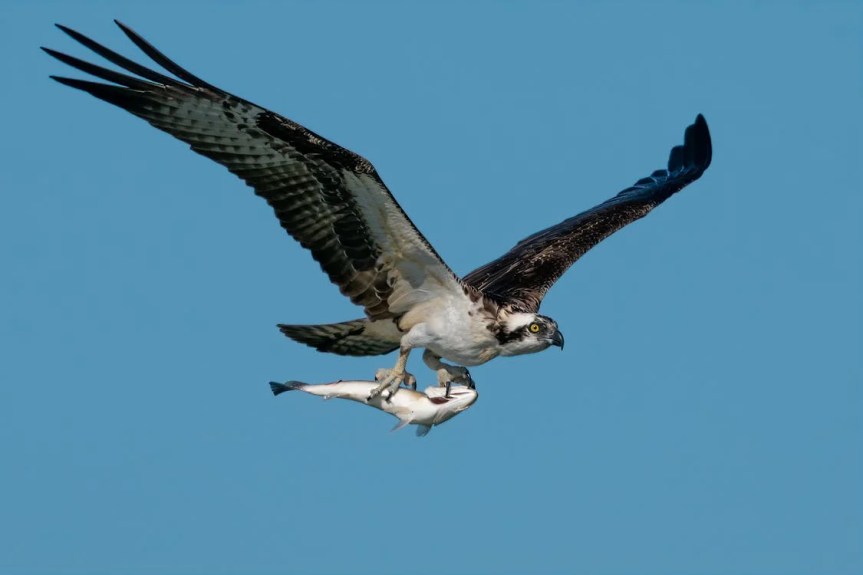
While we were leaving the beach yesterday, we saw big osprey fly overhead with a fish in its claws. The bird decided to stop and eat his fish on top of a telephone pole.
I kept waiting for the floppy fish to drop, but he had a good hold of it! Check out the video below to see the osprey and his catch:
More About Florida’s Ospreys
Florida is renowned for its diverse wildlife, and one of the most captivating avian species found here is the osprey. Also known as fish hawks, these large, majestic birds of prey are a common sight along Florida’s coasts, wetlands, and waterways.
Read on to learn more about the fascinating world of Florida ospreys, exploring their habits, habitat, and significance in the ecosystem.
1. Habitat and Distribution
Ospreys are widespread in Florida, with a presence throughout the state, from coastal regions to inland lakes and rivers. They prefer habitats near water bodies, including marshes, estuaries, mangroves, and even man-made structures like utility poles and bridges. Their adaptability to various environments has made them a familiar sight for residents and visitors alike. We often see them here at the beach!
2. Physical Characteristics
Florida ospreys are large raptors with distinctive features. They have a wingspan of around 5 to 6 feet, a hooked beak for tearing flesh, and sharp talons for catching and gripping fish. Their plumage is predominantly brown on the back and wings, while the head, neck, and underparts are white with dark speckles. Their keen eyesight and aerial agility make them efficient hunters.
3. Feeding Behavior
Ospreys are specialized fish-eaters, and their hunting technique is impressive to witness. They soar high above the water, scanning for prey with remarkable precision. Once they spot a fish near the surface, they dive feet-first, plunging into the water to snatch their meal. Their ability to grasp fish in flight is remarkable, showcasing their hunting prowess.
4. Breeding and Nesting
Breeding season for ospreys typically begins in late winter or early spring. They are monogamous birds, often returning to the same nesting site year after year. Ospreys construct large nests made of sticks, grass, and other materials in elevated locations such as treetops, power poles, or specially designed platforms. These nests can grow quite large over time as they add to them each season.
5. Conservation Status
While ospreys are not currently considered endangered, they face threats such as habitat loss, pollution, and human disturbance. Conservation efforts, including the protection of nesting sites and the promotion of sustainable fishing practices, are crucial for their long-term survival.
6. Ecological Importance
Ospreys play a vital role in the ecosystem as top predators. By controlling fish populations, they help maintain the balance of aquatic ecosystems. Their presence also indicates the health of water bodies, as they rely on clean water and abundant fish stocks for survival.
7. Enjoying Osprey Watching
For nature enthusiasts and birdwatchers, observing ospreys in their natural habitat is a rewarding experience. Many wildlife sanctuaries, parks, and coastal areas in Florida offer opportunities for osprey watching. Binoculars or a camera with a zoom lens can enhance the viewing experience without disturbing these magnificent birds.
Discover more from Keane & Coastal
Subscribe to get the latest posts sent to your email.
 Keane & Coastal
5 thoughts on “A Florida Osprey and a Floppy Fish”