


Thai basil, also known as Ocimum basilicum var. thyrsiflorum or Thai sweet basil, is an herb that adds a unique and vibrant flavor to various dishes. Its distinctive aroma and slightly spicy, licorice-like taste make it a favorite in Thai, Vietnamese, and other Southeast Asian cuisines.
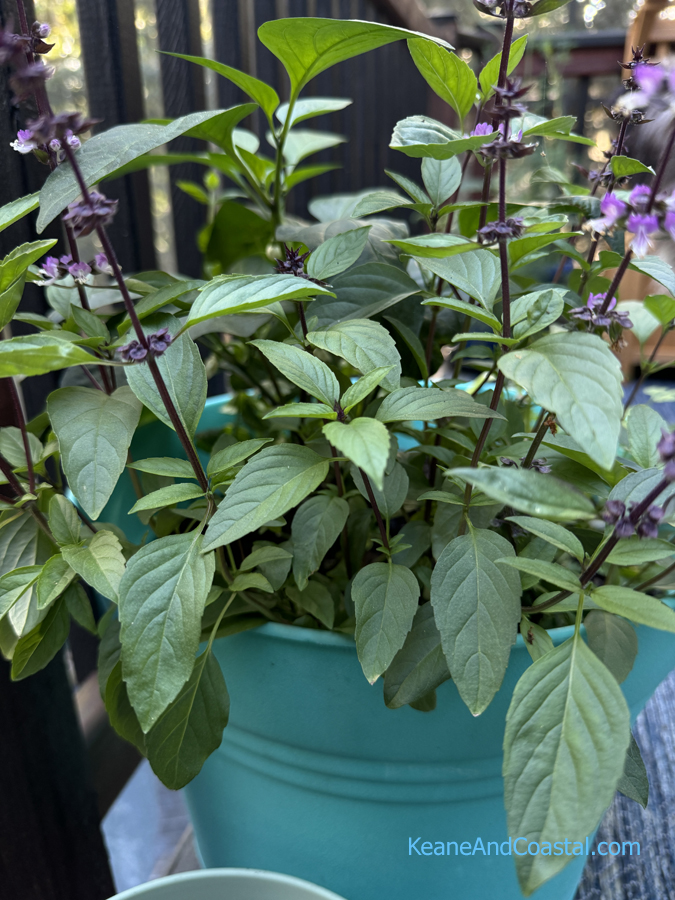
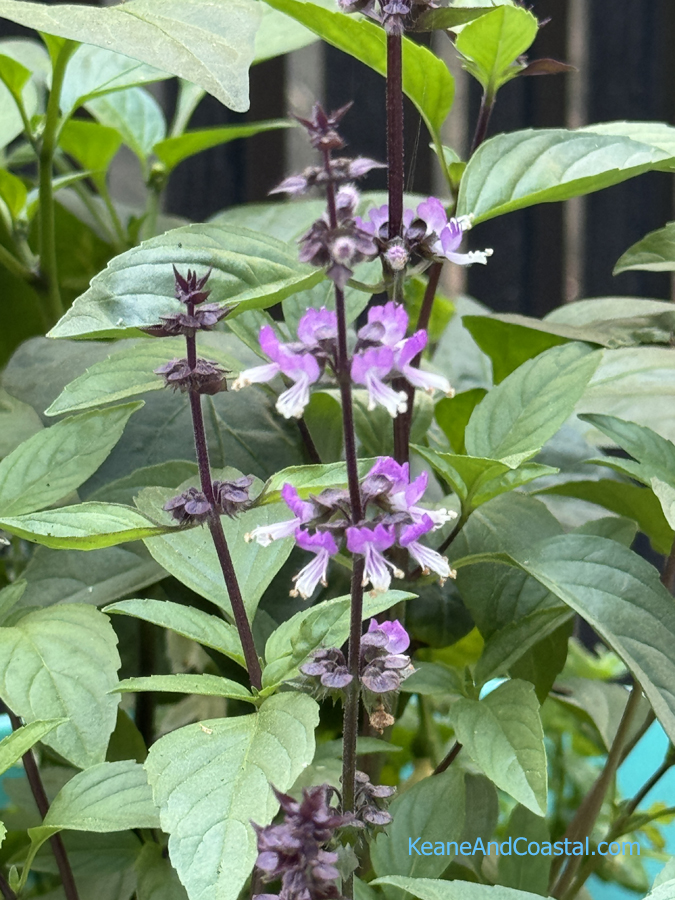
My Thai basil is currently flowering with beautiful little purple blooms. I moved them from my hydroponic garden tower to a pot outside so they could continue growing and produce seeds. The basil was easy to grow both hydroponically and in soil.
Characteristics of Thai Basil
Thai basil differs from the more common Italian basil in several ways. It has a stronger flavor profile with hints of anise and pepper, making it a key ingredient in many Thai dishes. The leaves are slightly smaller and narrower than Italian basil, and they come in shades ranging from deep green to purple.
Culinary Uses
- Thai Cuisine: Thai basil is a staple herb in Thai cooking, used in dishes like Thai basil chicken (Pad Krapow Gai) and Thai basil beef (Pad Gra Prow).
- Vietnamese Cuisine: In Vietnamese cuisine, Thai basil is often used as a garnish for pho or added to fresh spring rolls for a burst of flavor.
- Salads and Soups: It can also be used in salads, soups, and stir-fries to enhance the overall taste and aroma of the dish.
- Infused Oils and Vinegars: Thai basil-infused oils and vinegars can add depth to dressings and marinades.
Can You Eat Thai Basil Flowers?
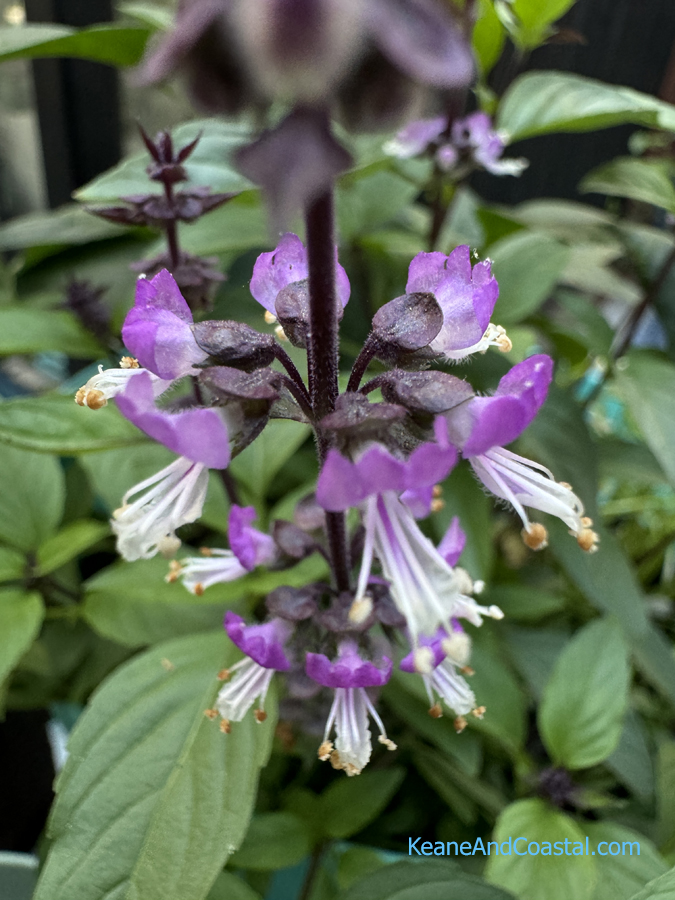
Thai basil flowers are not just a pretty part of the Thai basil plant, but they are also edible!
The flowers appear as small clusters of white or purple blossoms at the top of the plant’s stems, complementing the herb’s licorice and minty flavors.
In culinary uses, Thai basil flowers are edible and commonly used as garnishes in Thai and Southeast Asian dishes. They can also be infused into syrups, teas, or vinegars for a floral essence.
Harvested at full bloom, Thai basil flowers add a decorative touch to cocktails, desserts, and salads, enhancing both visual presentation and flavor.
Thai Basil Recipes to Try
Thai Basil Chicken (Pad Krapow Gai)
Ingredients:
- 1 lb chicken breast, thinly sliced
- 2 tbsp oil
- 3 cloves garlic, minced
- 1 shallot, sliced
- 1-2 red chili peppers, sliced
- 1 cup Thai basil leaves
- 2 tbsp soy sauce
- 1 tbsp oyster sauce
- 1 tsp sugar
- 1 tbsp fish sauce
- Cooked rice, for serving
Instructions:
- Heat oil in a pan and sauté garlic, shallot, and chili peppers until fragrant.
- Add chicken and cook until no longer pink.
- Stir in soy sauce, oyster sauce, sugar, and fish sauce.
- Add Thai basil leaves and cook until wilted.
- Serve hot over rice.
Thai Basil Beef (Pad Gra Prow)
Ingredients:
- 1 lb beef sirloin, thinly sliced
- 2 tbsp oil
- 3 cloves garlic, minced
- 1 shallot, sliced
- 1-2 red chili peppers, sliced
- 1 cup Thai basil leaves
- 2 tbsp soy sauce
- 1 tbsp oyster sauce
- 1 tsp sugar
- 1 tbsp fish sauce
- Cooked rice, for serving
Instructions:
- Heat oil in a pan and sauté garlic, shallot, and chili peppers until fragrant.
- Add beef and cook until browned.
- Stir in soy sauce, oyster sauce, sugar, and fish sauce.
- Add Thai basil leaves and cook until wilted.
- Serve hot over rice.
Conclusion
Thai basil is a versatile herb that brings a burst of flavor to numerous dishes, from Thai classics to fusion creations. Its aromatic and peppery notes make it a must-have in any kitchen looking to explore the rich and diverse flavors of Southeast Asian cuisine. Incorporate Thai basil into your cooking repertoire and elevate your dishes with its vibrant taste and aroma.
Discover more from Keane & Coastal
Subscribe to get the latest posts sent to your email.
 Keane & Coastal
3 thoughts on “Exploring the Vibrant Flavor of Thai Basil”