

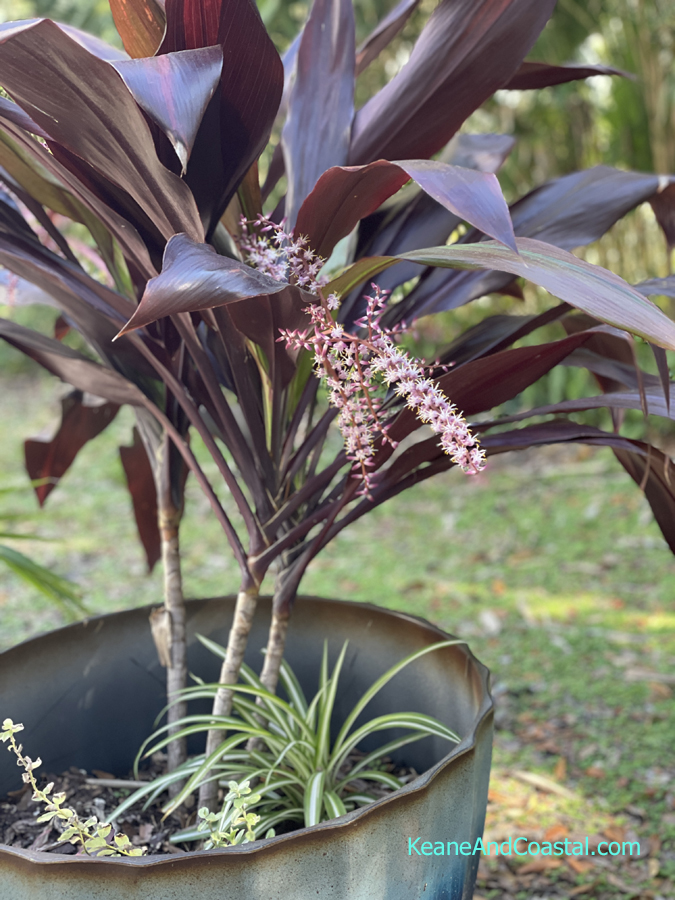
Our Hawaiian Ti plant is flowering for the first time after relocating it to a very sunny spot! If you have these vibrant leafy plants in your yard, you might have wondered how to care for the Hawaiian Ti plant and encourage more to grow. Read on for tips on growing and caring for your Hawaiian Ti plant.

It’s just the end of January, so our flowers are a little early! Normally it happens in spring to summer, when the plants send up panicles of small, star-shaped flowers in white, pale yellow, pink, or light purple colors.
Indoor flowering is rare, and it typically won’t happen without ample sunlight and fertilization. I was worried the new spot was going to be too sunny, but apparently, it’s just what this plant wanted!
Our flowers are a pretty white and purple/pink color.

Overview of Hawaiian Ti Plant Care
Hawaiian Ti plants, also known as Cordyline Fruticosa, are vibrant and attractive ornamental plants that are cherished for their colorful foliage and exotic appearance. These plants are native to tropical Southeast Asia and the Pacific and have become popular choices for indoor and outdoor landscaping due to their low maintenance requirements and striking visual appeal.
The Hawaiian Ti plant is often referred to as a “good luck plant” due to its association with positive energy, good fortune, and protection. In Hawaiian culture, the Ti plant is believed to ward off evil spirits and attract positive forces, thus bringing good luck to the inhabitants of the space where it is grown.
Its vibrant and lush foliage is also considered to be aesthetically pleasing and is said to create a harmonious and serene environment, further contributing to its designation as a good luck plant. Additionally, the Ti plant holds significant cultural and traditional value in Hawaii, where it is used in various ceremonies and rituals symbolizing prosperity and blessings.
Caring for Hawaiian Ti plants outside involves a few key elements that contribute to their health and vibrancy. These include:
1. Light:
Hawaiian Ti plants thrive in bright, indirect light. They can tolerate some direct sunlight, particularly in the morning or late afternoon, but intense, direct sunlight should be avoided as it can lead to leaf scorching. I had always avoided putting ours in direct sunlight, but it appears to actually like it.
2. Watering:
Maintaining moderate soil moisture is essential for Hawaiian Ti plants. They prefer consistently moist, but not waterlogged, soil. It’s important to allow the soil to partially dry out between waterings to prevent root rot.
3. Temperature and Humidity:
These plants favor warm, humid environments. They should be kept in locations with temperatures above 60°F (15.5°C) and benefit from regular misting to increase humidity levels, especially if grown indoors. Ours is located outside, so I’ve never misted it.
4. Fertilization:
Regular fertilization with a balanced, water-soluble fertilizer during the growing season (spring and summer) can help promote healthy growth and vibrant foliage. This pretty much goes for any of your plants!
5. Pruning:
Pruning is beneficial for maintaining the desired shape of the Hawaiian ti plant and can also promote new growth. Removing dead or damaged leaves and stems is essential for the overall health of the plant. Also be sure to remove any leaves that have signs of disease.
6. Repotting:
Hawaiian Ti plants should be repotted every 2-3 years to provide fresh, nutrient-rich soil and room for root expansion. Or you can just plant them right in the ground!
Growing Hawaiian Ti Plants Indoors
When growing Hawaiian Ti plants indoors, try to replicate their natural tropical habitat as closely as possible. Here are some key considerations for indoor cultivation:
1. Location:
Place the plant in a well-lit area with bright, indirect sunlight. South- or west-facing windows are ideal, as they receive ample sunlight throughout the day.
2. Soil:
Use a well-draining, high-quality potting mix that retains moisture without becoming waterlogged. A mix containing peat moss, perlite, and pine bark tends to work well for Hawaiian Ti plants.
3. Watering:
Water the plant when the top inch of the soil feels dry to the touch. It’s essential to provide consistent moisture without overwatering, as excessive water can lead to root rot.
4. Fertilization:
Feed the plant with a balanced liquid fertilizer every 4-6 weeks during the growing season (spring and summer) to support healthy growth.
Varieties of Hawaiian Ti Plants
Hawaiian Ti plants are available in a diverse array of cultivars, each showcasing unique foliage colors, patterns, and growth habits. Some popular varieties include:
1. Cordyline Fruticosa ‘Red Sister’:
This variety is known for its striking, multicolored leaves that feature shades of green, pink, and burgundy. The vibrant foliage adds a dramatic touch to any indoor or outdoor setting.
2. Cordyline Fruticosa ‘Kiwi’:
‘Kiwi’ displays striking green and cream-colored leaves with bright pink highlights. Its compact growth habit makes it an excellent choice for smaller spaces.
3. Cordyline Fruticosa ‘Black Magic’:
‘Black Magic’ is distinguished by its deep purplish-black leaves, creating a bold and captivating visual impact. This variety thrives in warm, humid environments.
4. Cordyline Fruticosa ‘Chocolate Queen’:
With its rich, chocolatey hues and contrasting pink margins, ‘Chocolate Queen’ is a captivating cultivar that adds a touch of elegance to any indoor setting.
5. Cordyline Fruticosa ‘Firebrand’:
‘Firebrand’ showcases vibrant red leaves with contrasting pink margins, creating a fiery and eye-catching display. This variety thrives in bright, indirect light.
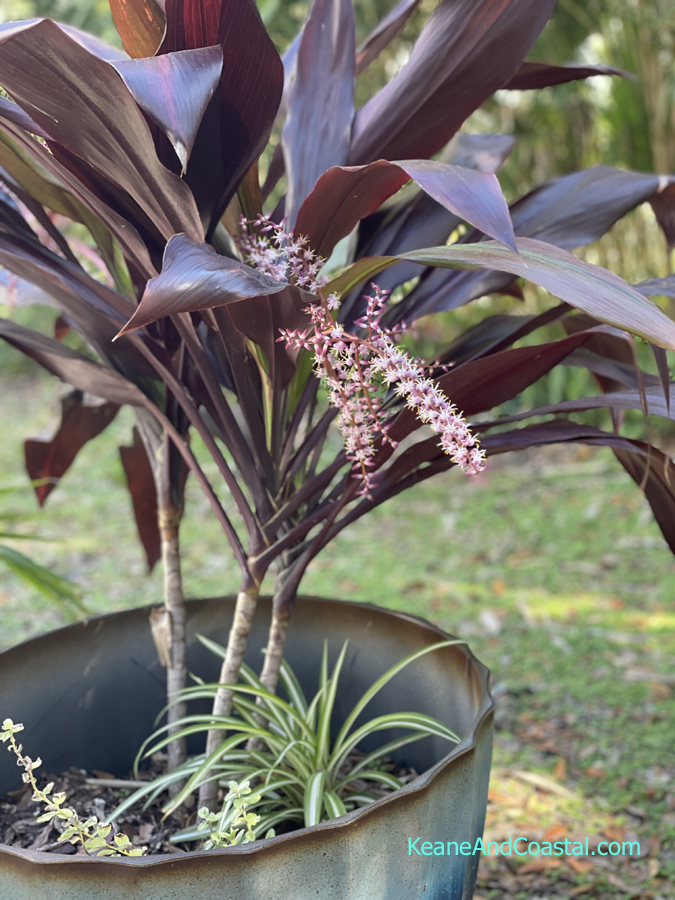
Which one do you think I have here? Let me know in the comments!
How to Propagate More Hawaiian Ti Plants
To propagate more Hawaiian Ti plants, you can use stem cuttings.
- Select a healthy stem: Choose a stem that is disease-free and has at least a few leaves.
- Cut the stem: Use a clean, sharp knife to cut a 4-6 inch section of the stem, making the cut just below a leaf node. Remove the lower leaves to expose the nodes where roots will form.
- Plant the cutting: Place the cutting in a container with well-draining potting mix, burying the nodes where you removed the leaves.
- Provide the right environment: Keep the cutting in a warm, bright location with indirect sunlight. Make sure the soil stays consistently moist but not waterlogged.
- Wait for roots to develop: Over the next few weeks, roots should begin to form from the nodes. You can gently tug on the cutting to feel for resistance, which indicates that roots have developed.
Once the cutting has developed a healthy root system, you can transplant it into a larger container or into the garden to continue growing into a new Hawaiian Ti plant. With the right combination of light, water, and attention to detail, these plants can flourish and bring joy to any environment.
Discover more from Keane & Coastal
Subscribe to get the latest posts sent to your email.
 Keane & Coastal
2 thoughts on “Tropical Beauty: Hawaiian Ti Plant Care, Growth and Propagating”