

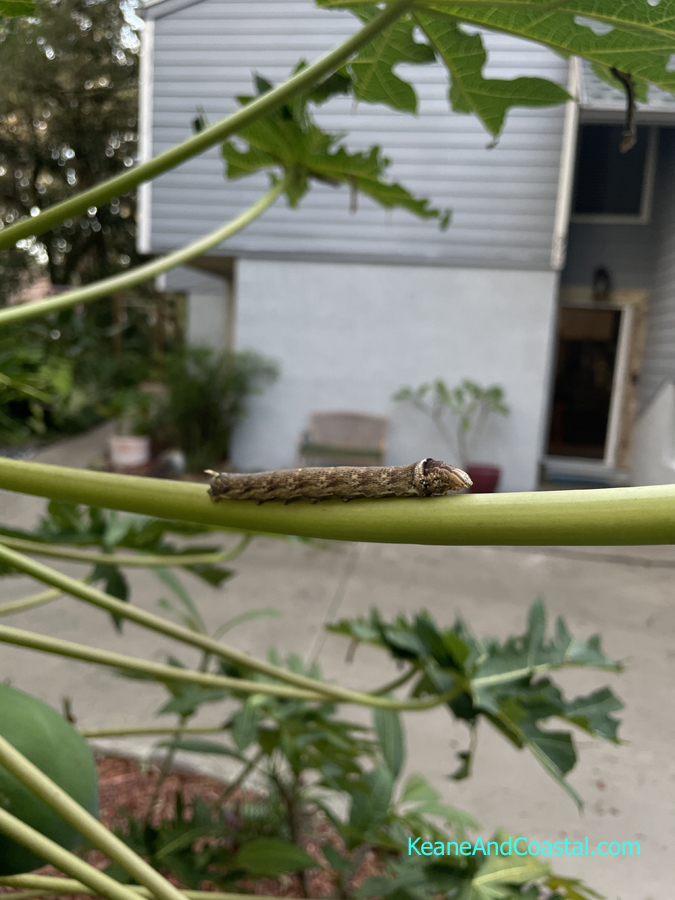
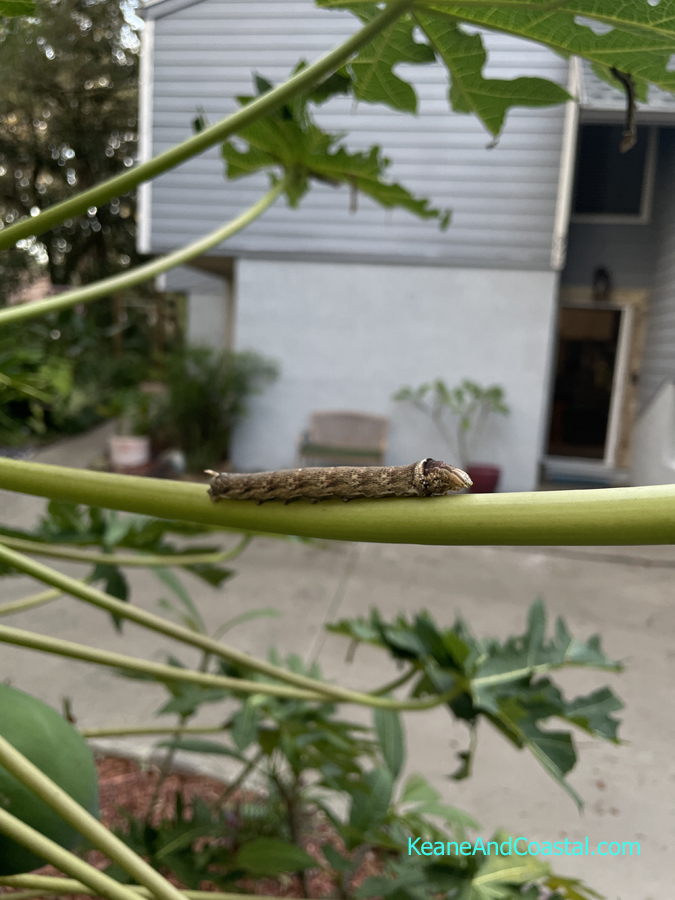
One day my papaya tree was fine, and the next it was infested with giant brown and green caterpillars with voracious appetites. We found at least 50 Papaya Hornworms and had to hand pick them off the tree. Some of them did not want to leave!
What is a Papaya Hornworn?
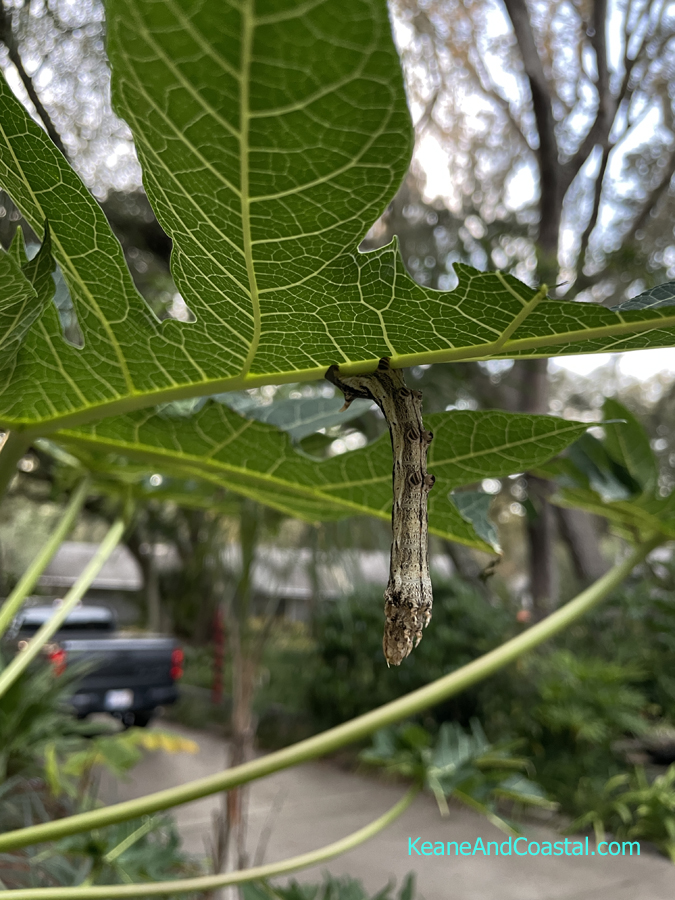
Papaya Hornworms, also known as Sphinx caterpillars, are the larval stage of sphinx moths. They can be identified by their immense size, mottled brown or bright green colors, and a distinctive horn on their posterior.
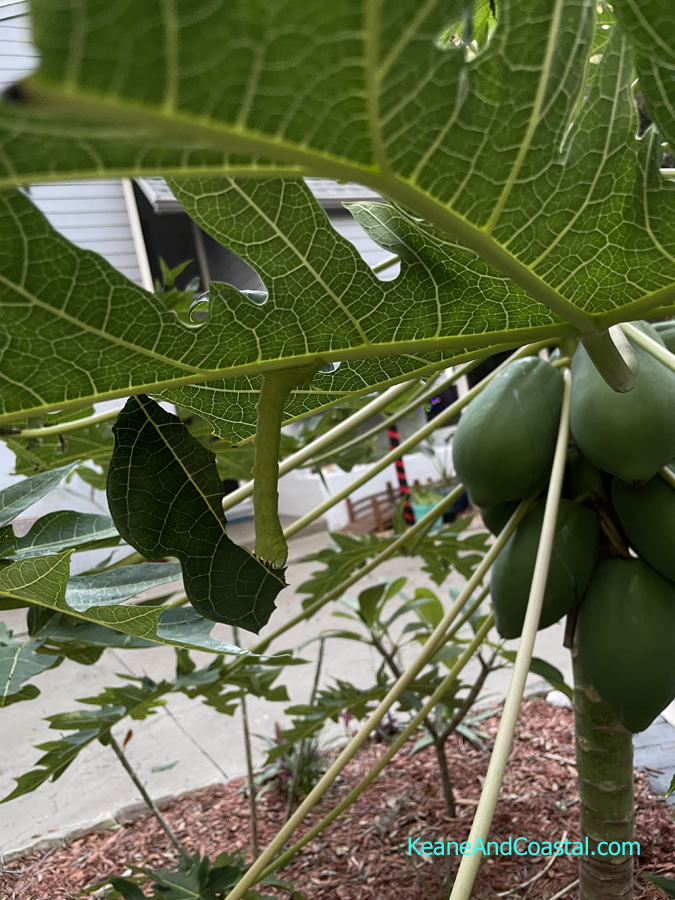
These caterpillars feed primarily on the leaves of papaya plants and their feeding frenzy can cause noticeable damage, with telltale signs including chewed foliage and droppings.
The ones on our tree were both brown and green, and larger than my fingers! Many of the leaves had already been eaten away and we had to act fast to save the tree from these garden pests. We wore gloves and picked them off one by one.
Check out the Reel from when we first spotted the Papaya Hornworms:
How to Deal with Papaya Hornworms
Dealing with papaya hornworms requires a combination of preventive measures and targeted control methods.
For Removal of Hornworms:
1. Identify the Pest
Before taking any action, correctly identify the pest. Papaya hornworms are large, green caterpillars with horn-like protrusions on their rear ends. They primarily feed on the leaves of papaya plants but can also infest other plants in the same family, such as tomatoes and peppers. They look similar to tomato hornworms, which can be dealt with in a similar manner.
2. Handpick Them Off Plants
One of the most effective methods for small-scale infestations is handpicking. Inspect your papaya plants regularly, especially the undersides of leaves, and manually remove any hornworms you find. Wear gloves if you prefer, as the caterpillars can have spines that might irritate your skin.
3. Drop them in Water
Drop them in a bucket of soapy water to kill them and then dump that later.
Ways to Prevent Papaya Hornworm Infestations:
- Natural Predators: Encourage natural predators such as parasitic wasps and predatory insects like ladybugs and lacewings. These beneficial insects help keep the hornworm population in check. Avoid using broad-spectrum insecticides that could harm these beneficial insects.
- Neem Oil: Neem oil is a natural insecticide derived from the neem tree. It disrupts the growth and development of insect pests like hornworms while being relatively safe for beneficial insects and other wildlife. Dilute neem oil according to the manufacturer’s instructions and spray it on affected plants, focusing on the undersides of leaves where hornworms often feed.
- Bacillus thuringiensis (Bt): Bt is a naturally occurring bacterium that is toxic to many caterpillar species, including papaya hornworms. It is available in various formulations, including sprays and dusts. Apply Bt to the foliage of affected plants, ensuring thorough coverage, especially on new growth where young hornworms may be feeding.
- Crop Rotation and Sanitation: Rotate your papaya plants with unrelated crops to disrupt the hornworm life cycle and reduce the likelihood of recurring infestations. Practice good garden sanitation by removing and disposing of plant debris where hornworms may pupate.
- Barrier Methods: If hornworms are consistently problematic, consider using physical barriers such as row covers or netting to protect your papaya plants from adult moths laying eggs.
- Chemical Insecticides (Last Resort): If infestations are severe and other methods have failed, you may consider using chemical insecticides labeled for use against papaya hornworms. However, use them as a last resort and always follow the instructions on the label carefully to minimize risks to human health and the environment.
By combining these strategies, you can effectively manage papaya hornworms while minimizing harm to beneficial insects and maintaining a healthy garden ecosystem.
We kept an eye on the papaya tree, and found a few more over the next week, but then they stopped showing up. We haven’t had another outbreak since.
Discover more from Keane & Coastal
Subscribe to get the latest posts sent to your email.
 Keane & Coastal
One thought on “Attack of the Papaya Hornworms”